5,000 people land in Kigali for the 20th Africa Food Systems Forum
General
Published: 2026-08-28T22:05:43 · Updated: 2026-08-28T20:05:43Z
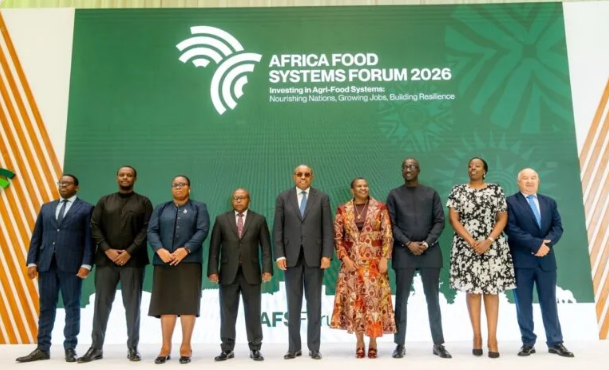
The 20th edition of Africa's biggest agriculture summit arrives with $18.5 billion in investment asks from last year still pending.
Rwanda's President Paul Kagame will open the 20th Africa Food Systems Forum in Kigali on August 31. The main summit runs from September 1 to 4 at the Kigali Convention Centre, with more than 5,000 delegates expected from over 50 countries. A food festival closes it out.
This year's theme is "Investing in Africa's Agri-Food Systems: Nourishing Nations, Growing Jobs, Building Resilience." The programme covers five priorities: investment and finance, food security and nutrition, climate resilience, youth and digital innovation, and trade and markets.
Twenty Years From Norway to Kigali
The forum began in 2006 as the African Green Revolution Conference, held in Oslo. It moved to the continent in 2010, spent years under the name AGRF, and eventually became the Africa Food Systems Forum. AGRA, the Nairobi-based Alliance for a Green Revolution in Africa, organises it alongside the host government each year.
Kigali is hosting for the fifth time, having previously done so in 2018, 2020, 2022, and 2024. Rwanda has become the forum's most frequent home.
The Engine Is the Investment Room
The part of the summit that matters most to governments and investors is the Investment Room, where countries pitch costed food systems plans to financiers.
At last year's summit in Dakar, 11 countries presented a combined $18.5 billion in national food systems investment opportunities. Six of those came through Country Legacy Programmes, a scheme running since 2023 that helps governments convert food policy into something an investor can actually read and act on.
The six from Dakar total roughly $9 billion: Nigeria's NiPHaST post-harvest programme at $3.5 billion, Uganda's multi-commodity plan at $1.4 billion, Somalia at $1.38 billion, Zimbabwe at $1.042 billion, Liberia at $900 million, and Senegal at $858 million. Sixty-six small and medium enterprises put another $90.5 million in asks before more than 100 registered investors.
Those are figures for money sought, not money secured. The 2025 summit report describes them as plans tabled for consideration.
Who Is in the Room
The confirmed speaker list includes Sidi Ould Tah, who has run the African Development Bank since September 2025, AGRA president Alice Ruhweza, FAO director-general Qu Dongyu, and IFAD president Alvaro Lario.
Josefa Sacko is also speaking, which makes her presence worth noting. Angola's ambassador to Italy and permanent representative to the UN agencies in Rome, Sacko was endorsed by the African Union Executive Council on July 29 as Africa's candidate to lead the FAO from 2027, after Morocco and Uganda withdrew their bids. She served as the AU's agriculture commissioner from 2017 to 2025. Qu Dongyu's term ends in July 2027. Both of them will be in Kigali at the same time.
Six former heads of state sit on the Council of the Wise, including former Nigerian President Goodluck Jonathan and Ethiopia's Hailemariam Dessalegn, who chairs the AGRA board.
What Kenya Should Be Watching
Kenyan researchers had a strong showing in Dakar. Professor Mary Abukutsa Onyango shared the 2025 Africa Food Prize for her work on indigenous vegetables. Kenyans also won the WAYA grand prize and the female ag-tech innovator award, worth $300,000 in grants combined.
The trade picture is less flattering. Kenya spent KES 81.6 billion on food and beverage imports in the first quarter of 2026, the highest first-quarter figure on record. No Kenyan government has yet taken a Legacy Programme slot, which is the mechanism designed to connect a country's food investment plan directly to financiers. That gap is worth paying attention to.
The Numbers to Watch After Kigali
The 2025 summit report set specific targets for this forum: at least five Legacy Programmes finalised with investment actually received by the end of 2026, twelve by the end of 2027, at least 20 of the 66 Dakar enterprises financed by year-end, and between 10 and 20 partnerships formalised.
Those targets are measurable. What Kigali announces next week can be checked against them.