Airtel Africa and SpaceX Complete Starlink Mobile Testing in Kenya
Published: 2026-03-25T10:04:13 · Updated: 2026-04-22T08:35:34Z
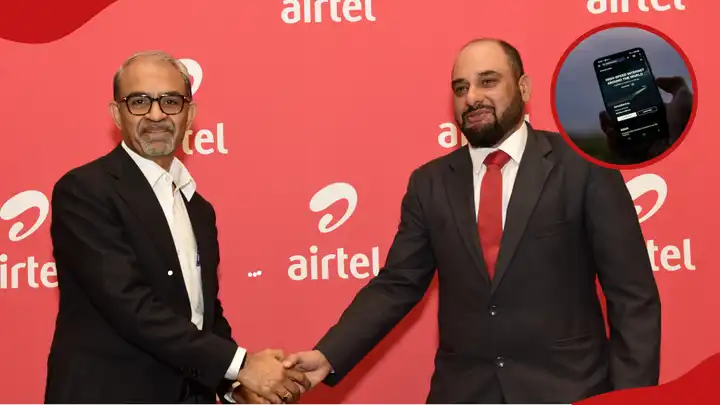
This week, Airtel Africa announced the successful field testing of Starlink Mobile’s Direct-to-Cell technology, a milestone that signifies the ultimate democratization of mobile connectivity.
During the recent test, Airtel managed to get completely standard, off-the-shelf 4G smartphones to connect directly to Starlink’s vast constellation of low-Earth orbit (LEO) satellites. This was achieved in areas previously considered black holes for cellular coverage, locations utterly devoid of terrestrial towers.
Crucially, the connection was not just a basic network handshake. Airtel customers were able to use light-data applications, the bedrock of the African digital economy. They successfully completed WhatsApp calls, chatted on Facebook Messenger, and, most importantly, executed financial transactions directly through the Airtel app. This capability, in partnership with SpaceX, effectively bridges the gap between the unreachable and the connected, as Airtel described it.
>"We are leveraging the insights from this successful testing to prepare for the expansion of this service across our 14 markets"
While Airtel’s testing is a profound milestone, they are competing on a crowded and sophisticated field. The race is defined by two distinctly different technological philosophies.
MTN vs. Airtel This is a battle of speed versus scale. The competition between Airtel and MTN, the continent's two heavyweights, has been intense. While Airtel claims the geographical bragging rights of scaling this across 14 markets, they were narrowly beaten to the punch. Just two weeks ago, MTN Zambia successfully completed the continent's first field test of the exact same Direct-to-Cell technology. MTN pulled off the first-ever satellite-based Mobile Money (MoMo) transaction completely off the grid.
Airtel’s advantage lies in the sheer weight of its 174 million subscriber ecosystem. The partnership they formalized with SpaceX back in 2025 was a high-stakes bet that they could outsource their hardest remote coverage. There is no longer a need to spend billions battling mountains, rivers, and unreliable power grids to build physical masts when you can beam a 4G signal directly from space.
The Infrastructure Hybrid: Safaricom's Defensible Position While MTN and Airtel are racing to bypass the network tower entirely,Safaricom, is playing a different game.
Safaricom is leveraging both Starlink and Amazon’s upcoming Project Kuiper for satellite backhaul. In this model, Safaricom is building a lite cell tower in a remote area. But instead of running a fragile and expensive fiber-optic cable to connect that tower to the internet, they put a satellite dish on top. The result is a hybrid solution where you still connect to a Safaricom mast, receiving a full-strength, high-speed 4G or 5G signal, and the mast itself relays that data to space. this reinforces their massive physical footprint rather than abandoning it.
Regulatory Gatekeepers: Spectrum Overlay The technology has arrived, and it works. But the timeline for commercial availability is not controlled by SpaceX or Airtel. It rests entirely with the region's regulatory bodies, particularly the Communications Authority of Kenya (CA).
The debate is about the invisible property lines of the airwaves. This centers on a concept called Spectrum Overlay.
For Direct-to-Cell to function, Starlink’s satellites must broadcast in the existing terrestrial LTE bands—frequencies already licensed to local operators. The CA has initiated a technical audit to set Power Flux Density (PFD) limits. These are essentially volume controls for satellites to ensure the signal from the sky does not create noise for the horizontal signals coming from nearby ground towers.
Safaricom has signaled concerns regarding Guard Bands, the tiny buffers of silent spectrum between operators. If Starlink’s signal bleeds out of Airtel’s assigned frequency and into Safaricom’s, it could cause dropped calls for users who aren't even using the satellite service. Furthermore, the CA must ensure that data moving through space still complies with Kenyan laws regarding lawful interception and contributions to the Universal Service Fund.
The Next Horizon Airtel’s current success is only the beginning. The service is currently restricted to light data and messaging because the fleet of D2C-enabled satellites is still growing. Airtel is already looking to the Starlink Mobile V2 phase.
Beyond basic fintech and text, the telco plans to launch fully-fledged, high-quality voice calling and expanded broadband capabilities. The arrival of the Space V2 constellation is the necessary catalyst for true satellite broadband.
The race for the African sky is over. The battle for the customer in the last unreachable mile has begun. In that battle, the ultimate winner is the citizen who will never again have to wonder if they have service.