Circle’s surging USDC market dominance strips financial sovereignty from East African payment networks
Blockchain & Crypto
Published: 2026-07-07T13:51:42 · Updated: 2026-07-07T12:43:01Z

USDC's 70% dominance forces a tough trade-off between transparency and sovereignty for East African fintech
Data from Allium Labs and Visa puts the reality of the market into stark numbers: Circle's USDC now accounts for roughly 70 percent of adjusted stablecoin transaction volume, dominating organic, non-speculative on-chain activity.
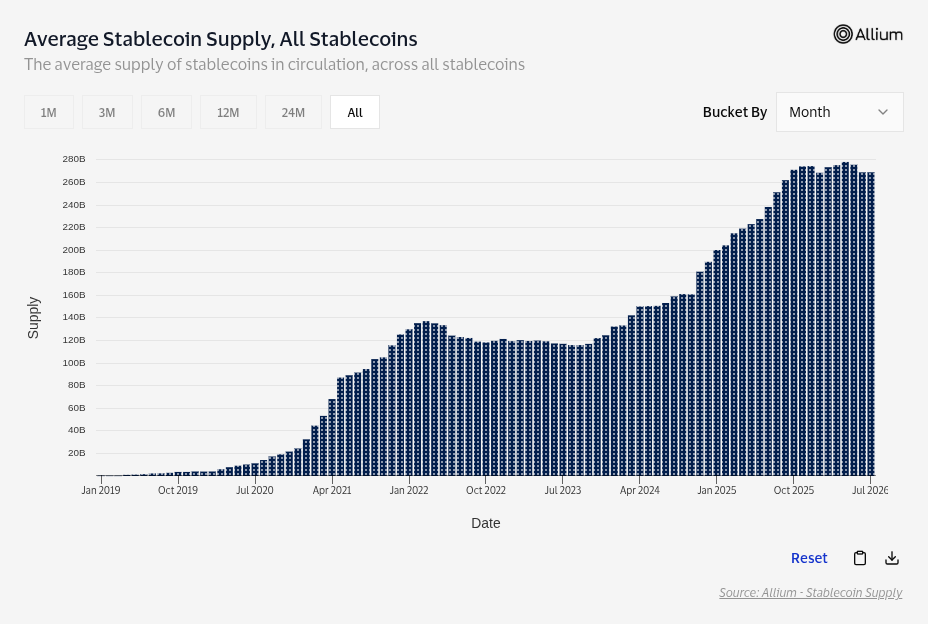
Stablecoin market share figures rarely matter to consumers. For businesses moving money across borders, they determine which settlement network becomes the region's de facto financial infrastructure.
Ask any importer in downtown Nairobi who scrambled to settle invoices after the Terra ecosystem collapsed in 2022, and the choice isn't about crypto ideology. It is the practical necessity of knowing your dollars will still be there tomorrow. For merchants moving liquidity between Nairobi and Lagos, capital preservation outweighs asset speculation. This shift reflects a broader move away from lightly backed stablecoins toward regulated issuers, drawing regional trade toward frameworks that mandate monthly reserve audits and answer directly to American oversight.
Aligning with foreign regulators brings real operational friction. As a regulated U.S. issuer, Circle must comply with sanctions obligations and lawful requests from U.S. authorities. Corporate compliance teams view this as a core security feature. For informal traders navigating rigid local capital controls, it introduces a real geopolitical vulnerability instead.
The situation is particularly delicate in Kenya. President William Ruto signed the Finance Act 2026 into law on June 23, 2026, codifying strict digital asset reporting requirements. Under Sections 6C and 6D of the Tax Procedures Act, Virtual Asset Service Providers must hand over user identities and granular transaction data directly to the Kenya Revenue Authority. Furthermore, the new framework aligns Kenya with the OECD's Crypto-Asset Reporting Framework (CARF) for automatic data-sharing with foreign tax jurisdictions. For businesses operating through regulated VASPs, anonymity is no longer a realistic expectation. Because USDC leaves an instantly auditable trail, it grants state agencies a highly detailed view of domestic liquidity, threatening to disrupt the informal cross-border corridors that keep the regional economy moving.
Local software engineering teams designing modern payment rails alongside traditional mobile money networks face a definitive infrastructure decision. Integrating with USDC plugs local fintech platforms directly into global settlement layers managed by Visa. This integration creates a complex jurisdictional challenge across the domestic ecosystem, though the calculation looks entirely different for a venture-backed fintech than for a small cross-border trader.
The Virtual Asset Service Providers Act, 2025 establishes this institutional division through an explicit dual-regulator model, while the 2026 draft regulations step in to operationalize the exact licensing, compliance, and capital mechanics. Under this statutory architecture, the Capital Markets Authority (CMA) oversees market-facing activities like crypto exchanges, brokerage services, and asset tokenization platforms. This legal framework underpins the Nairobi Securities Exchange's Kenya Digital Exchange (KDX) initiative, which welcomes highly traceable transaction trails to attract global institutional liquidity. For formal enterprises, this level of visibility unlocks international credit lines, curtails fraud, and satisfies strict corporate audit requirements.
Meanwhile, the VASP Act grants the Central Bank of Kenya (CBK) direct jurisdiction over payment-oriented infrastructure, specifically stablecoin issuance, custodial wallets, and digital payment processors. The CBK's regulatory priority centers on maintaining domestic monetary stability and protecting the local payments ecosystem anchored by M-PESA. This standard functional division, separating capital markets oversight from retail payments infrastructure, means that a hybrid fintech attempting to offer both tokenized yields and daily merchant wallets must navigate two distinct regulatory philosophies. For now, the corporate transparency required to secure tokenized real-world assets under the CMA's watch could potentially expose interconnected payment platforms to international compliance overreach, including strict OFAC sanctions screening or unilateral asset freezes.
This extreme market concentration exposes a larger gap: the clear absence of scalable, unified payment infrastructure across the continent. No central bank within the East African Community has deployed a functional retail digital currency capable of pulling trade volumes away from private stablecoins.
While initiatives like the Pan-African Payment and Settlement System (PAPSS) and the East African Payment System (EAPS) aim to fix this, they consistently stumble over liquidity bottlenecks and fragmented regulatory frameworks. Even with recent milestones, such as the 2026 Pesalink-PAPSS integration in Kenya, regional clearing networks lag behind the instant settlement speeds of private dollar networks. This underperformance reflects institutional caution, as national monetary authorities remain deeply protective of domestic foreign exchange clearing margins.
Right now, founders and cross-border business owners face a distinct structural dilemma if they choose to operate on-chain. The vast majority of domestic retail trade defaults safely to cash or the sovereign rails of M-PESA. Those navigating international trade corridors do not have that luxury. For these platforms, operating within an audited foreign dollar network provides vital transactional safety, but it links local fintech infrastructure directly to overseas regulatory enforcement. Founders now have to weigh immediate asset security against long-term operational dependency on a system they don't control.