Crypto App NoOnes Shuts Down After Sanctions, Affecting 2.5M Users
Blockchain & Crypto
Published: 2026-08-25T18:22:39 · Updated: 2026-08-25T16:22:39Z
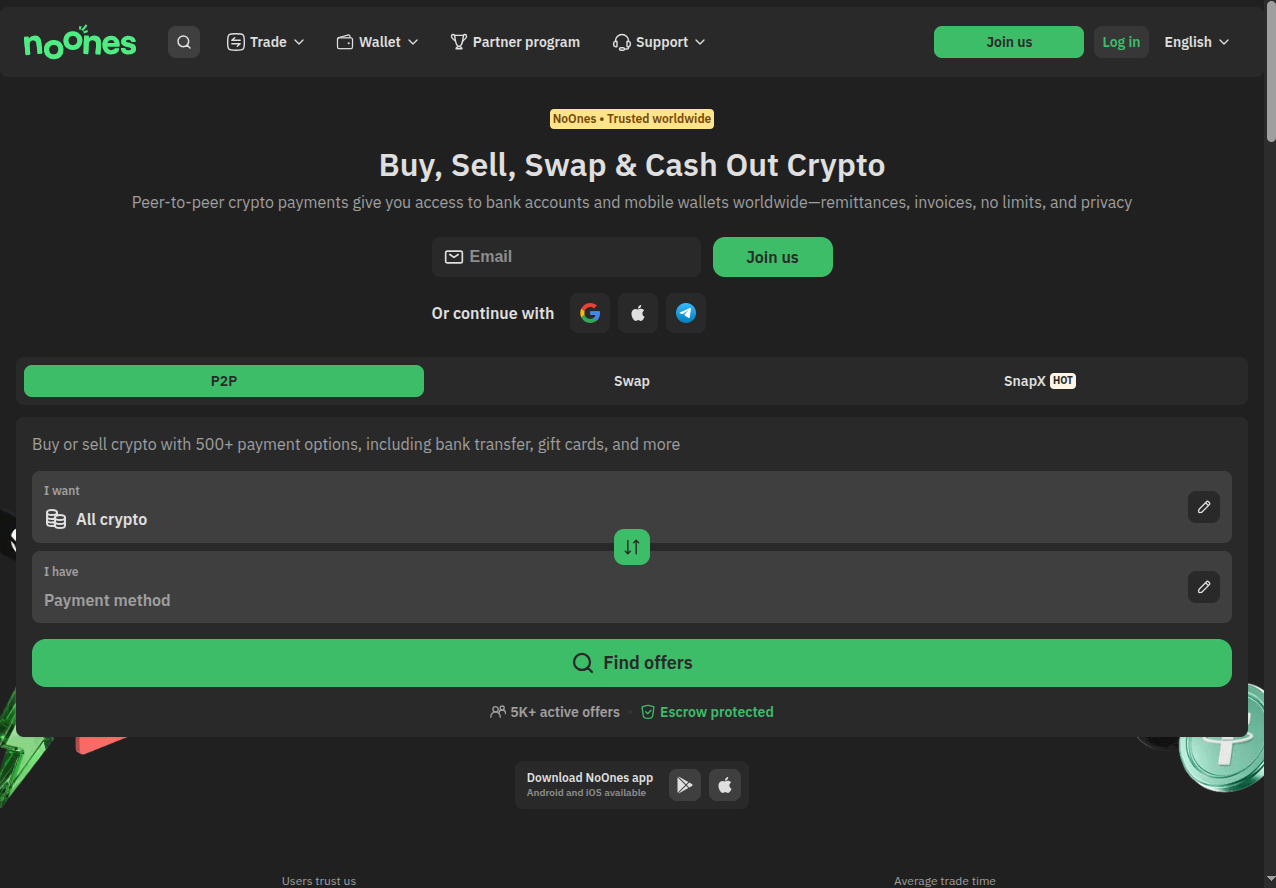
NoOnes, the peer-to-peer marketplace that carried much of East Africa's informal crypto liquidity, shut its trading platform down for good at 11:59 p.m. UTC on August 21st, 2026. Binance's own block on transactions tied to the platform, which took effect August 23, is close to a footnote by comparison. The exchange thousands of traders in Kenya, Uganda, and Tanzania relied on to price and settle USDT is simply gone.
The shutdown traces back to Europe. In late July, the Council of the EU adopted its 21st sanctions package targeting entities accused of helping Russia evade earlier restrictions, and added a company called NoOnecrypto Inc. to the list. The regulation never mentions the NoOnes brand or names who currently runs it. NoOnes told users at the time that the listing referred to a different company and that nothing needed to change. Weeks later, that read turned out to be wrong. Blockchain-monitoring firms and banking partners began treating NoOnes-linked wallets as high risk regardless of what the company said, and the partners the platform needed to keep functioning fell away. NoOnes began winding down on August 17. By August 21, the P2P marketplace, Swap, the Visa card, gift card sales, and Bitcoin Lightning support were all switched off. What remains is withdrawal-only access through the standard Bitcoin network and USDT on Tron, with no confirmed date for when even that closes.
Binance's own action sits inside a larger sweep. Starting August 7th, the exchange began phasing out transactions with a list that has grown to sixteen platforms, most tied to the same EU sanctions round, alongside two firms sanctioned separately by the US Treasury over alleged Iran-linked laundering. HTX, the exchange formerly known as Huobi, is on the list. So is NoOnecrypto. Binance says any transfer attempted with a listed platform after its cutoff date can be held for compliance review, with the receiving wallet temporarily restricted while that review runs. The company hasn't published how long a review takes. Existing crypto holdings aren't affected. What changes is who Binance will let a user transact with.
The reason compliance systems are jumpy about NoOnes-linked funds isn't abstract, and Kenya supplied a clear example a month before the shutdown. In July 2026, Kenya's Assets Recovery Agency won a High Court order freezing roughly $752,000 in USDT held in a Binance wallet, part of a wider $2.32 million money-laundering probe. Court filings allege the USDT trail started in a NoOnes account before moving into Binance wallets, then into Kenyan shillings, then into the banking system, in transfers investigators say were structured to stay under reporting thresholds. That case was already public by the time the EU sanctions round hit NoOnes directly. For any exchange running automated risk scoring, a documented laundering trail through a platform is a stronger signal than a sanctions list entry alone.
For traders who used NoOnes to move USDT across borders and settle deals without touching a bank, the options left are all worse. Other P2P platforms carry the identical exposure. Any of them could land on a future sanctions list. The trigger had nothing to do with how NoOnes operated in East Africa. It was a listing written in Brussels, thousands of miles from Nairobi. Self-custody sidesteps platform risk but pushes the compliance burden onto individual traders, most of whom have no practical way to check whether a counterparty's wallet is clean before a transfer clears. None of this is new risk. NoOnes' collapse just made it visible.
Kenya has the legal framework now, at least on paper. The Virtual Asset Service Providers Regulations, gazetted under Legal Notice No. 134 on July 22, give the Central Bank of Kenya and the Capital Markets Authority a structure to license exchanges, wallet providers, and stablecoin issuers, split by activity between the two regulators. Licensing itself hasn't opened. A Kenyan trader looking for a regulated, locally licensed alternative to NoOnes today finds a law that permits one to exist and nothing yet built on it. That's the gap traders are standing in this week: the old informal rails just collapsed, and the new formal ones haven't opened for business.
NoOnes built real liquidity infrastructure for three years and 2.5 million users, and still couldn't survive losing its banking and compliance partners at once. Kenya has moved faster than most of the region on regulation, and its licensing process still hasn't caught up to the moment its own courts helped create. The traders left holding USDT with nowhere clean to move it didn't cause any of this, and they're the ones paying for it first.