Election Technology is Evolving in Nigeria and Kenya. But Can it Deliver More Trusted Results?
General
Published: 2026-11-13T09:18:07 · Updated: 2026-11-13T08:18:07Z
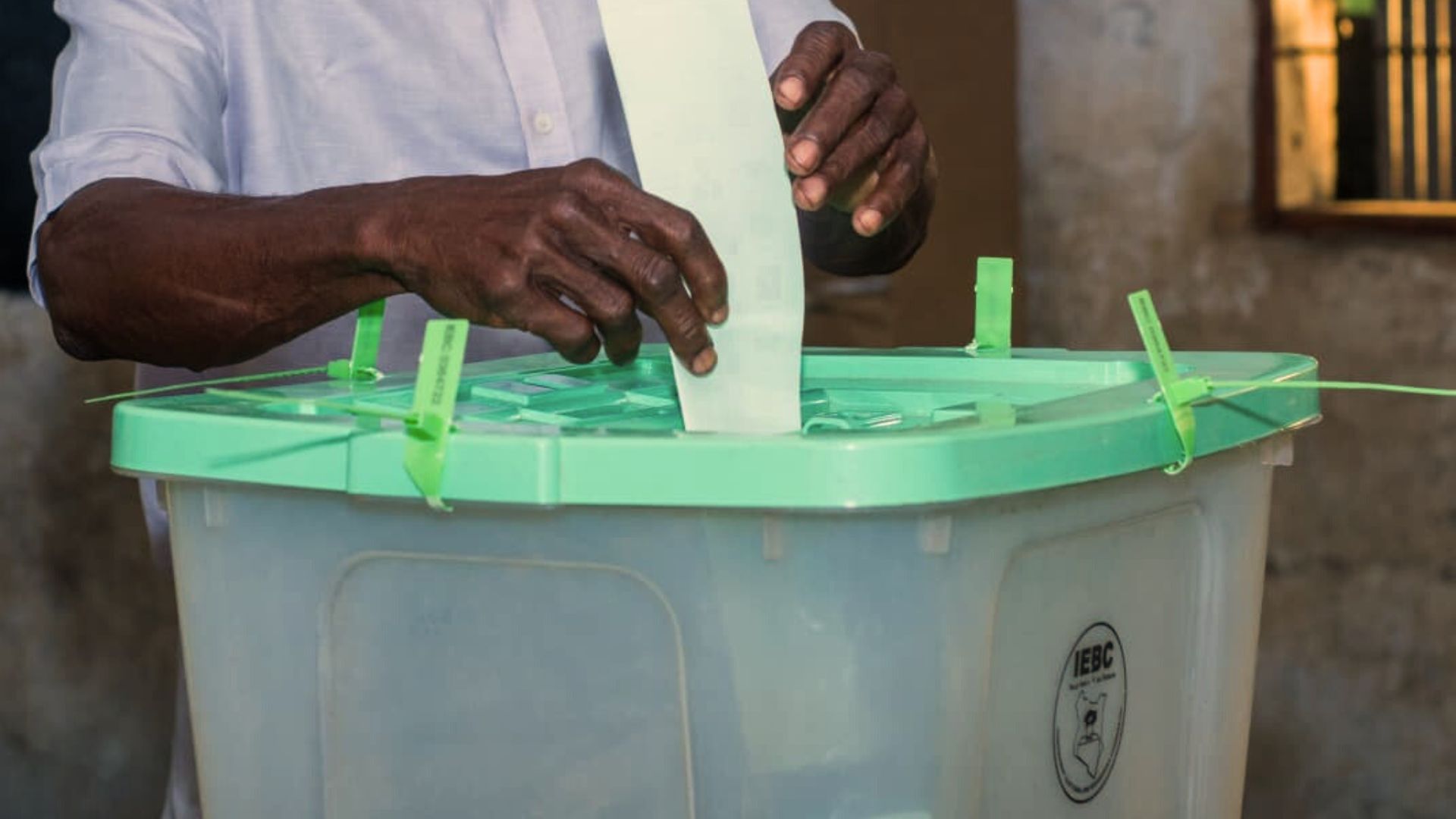
Election technology is often presented as a way to make elections faster, more accurate and more transparent. Across Africa, electoral commissions have invested in biometric registration, electronic voter identification and digital results transmission, hoping to reduce the administrative weaknesses that undermine public confidence in an election. Nigeria has steadily been expanding its use of these tools with its Independent National Electoral Commission (INEC) moving from biometric voter registration to electronic accreditation and the digital publication of polling-unit results. Kenya has also pursued a similar level of digitisation through its Kenya Integrated Elections Management System (KIEMS), although its experience has been shaped by repeated equipment failures and disputes over the management of election results. The two countries offer an interesting comparison. Nigeria's system has developed through successive additions to its electoral technology infrastructure, while Kenya's experience demonstrates how even an established system can struggle when infrastructure and institutional processes fail to work together. And as both countries approach another election cycle, the question is not simply how much technology they have introduced, but whether it can deliver a process that voters and observers can trust.
Nigeria's election technology has evolved in stages
Nigeria's current electoral technology infrastructure is the result of close to two decades of incremental changes. INEC began introducing Direct Data Capture Machines (DDCMs) in 2007, with full deployment by 2011. The laptop-based devices used fingerprint scanners and webcams to collect voters' biometric information and photographs. Ahead of the 2015 general election, INEC introduced chip-enabled Permanent Voter Cards (PVCs) and electronic Smart Card Readers, which checked voters' fingerprints against their registered biometric information during accreditation. The commission also began exploring ways to make polling-unit results more accessible. Early experiments with the Z-Pad – a device used to capture and upload election results – preceded the introduction of the INEC Result Viewing Portal (IReV). The portal gave the public a way to view images of polling-unit result sheets online, adding an extra layer of visibility to the results process. A more significant change came in 2021, when INEC introduced two systems that expanded the role of technology on election day. The Electronic Voter Identification (IVED) device was designed to make voter registration more mobile and efficient, while the Bimodal Voter Accreditation System (BVAS) replaced the Smart Card Reader. BVAS introduced two methods of biometric identification — fingerprint and facial recognition — and expanded the technology's role beyond voter accreditation by allowing polling-unit result sheets to be captured and uploaded to IReV. These developments have given Nigeria a system that uses technology at several points in the electoral process: registering voters, verifying their identities and making polling-unit results available online. Voting and counting, however, are still manual processes. The technology supports the process rather than replacing the physical ballot. When assessing what Nigeria has achieved, it is clear that a more sophisticated technology stack can improve how electoral information is collected and shared, but it does not automatically resolve questions about the conduct of an election or the credibility of its outcome. Those instead, depend on how reliably the systems operate and how effectively the commission handles failures and disputes.
Kenya's experience shows how quickly technical weaknesses can undermine confidence
Kenya's investment in election technology was shaped by the fallout from the disputed 2007 general election. The subsequent reforms led to the creation of the Independent Electoral and Boundaries Commission (IEBC) in 2011, and the introduction of technology intended to strengthen voter registration, identification and results transmission. These functions were eventually brought together under KIEMS. The system supports biometric voter registration, electronic identification of voters and the transmission of results from polling stations to the national tallying centre. Similar to Nigeria, however, voting and counting are still conducted using physical ballots. Kenya's early experience with electronic identification and results transmission exposed the practical difficulties of deploying this equipment across thousands of polling stations. During the 2013 general election, devices experienced battery and power problems, some officials encountered difficulties accessing the equipment, and poor network coverage affected the transmission of results. The central tallying system also struggled under the volume of incoming data, forcing the commission to rely on physical result forms. The IEBC introduced a new generation of equipment ahead of the 2017 election, but this did not quite eliminate the previous election's problems. Lack of connectivity was still a significant obstacle, with approximately 11,000 polling stations reportedly outside 3G coverage. There were also concerns about the way results were submitted, including instances in which numerical figures were transmitted without the corresponding official Form 34A – the document used to record results at polling stations. The presidential election was eventually annulled by the Supreme Court. Its ruling identified irregularities and illegalities in the transmission of results that affected the integrity of the election. The problems were not simply a matter of faulty devices; they raised wider questions about the IEBC's management of the process and the ability to verify the results it had declared.
The technology is only as reliable as the underlying systems
By the 2022 general election, Kenya had upgraded KIEMS and brought in Smartmatic to supply additional equipment and software. The IEBC also made provisions for polling stations where conventional mobile connectivity was unavailable, including the use of satellite phones to transmit results. The commission identified 1,111 polling centres outside 3G coverage and arranged for Thuraya satellite phones to support transmission from these locations. There were also additional safeguards put in place. A court ordered the IEBC to retain printed voter registers alongside the electronic register, providing an alternative where biometric identification could not be completed. This was not an insignificant consideration: 238 of the country's 46,229 polling stations reportedly had to use manual registers because of KIEMS failures. While the 2022 election was not without technical difficulties, the experience underlined the value of planning for them. Electronic systems can reduce administrative burdens and make information easier to transmit, yet they remain dependent on electricity, network coverage, functioning equipment, and trained personnel. Without workable alternatives, a technical failure at a polling station can quickly become a problem for the entire electoral process. Kenya's experience therefore shows that investing in more advanced equipment does not necessarily mean the underlying challenges have been resolved. The commission has had to contend with many of the same issues across election cycles, despite changes in the technology used.
Results transmission is not the same as transparency
There is another question that sits alongside the technical performance of these systems: how much of the electoral process can the public actually see and scrutinise? Nigeria's IReV portal makes polling-unit result sheets available for public viewing, while Kenya's KIEMS system is primarily designed to transmit results to the national tallying process. Both approaches rely on digital tools to handle information that would otherwise move through a largely paper-based process. But the ability to transmit results electronically is not, on its own, a guarantee of transparency. Public access to records and clear procedures for resolving discrepancies are just as important. That distinction has become especially relevant in Kenya following the National Assembly's passage of legislation that would remove the legal requirement for the IEBC to livestream election results. This recent development, which occurred in October 2026, prompted questions about transparency ahead of the next general election. For both countries, the challenge extends beyond getting information from polling stations to a central system. The public and election observers also need to be able to establish where the information came from, compare digital records with official result forms, and understand how discrepancies are addressed. Without those safeguards, digitisation may be making the process faster without necessarily making it more accountable.
What the Kenya and Nigeria can learn from each other
Nigeria and Kenya have built substantial election technology infrastructure, but neither country's experience suggests that technology alone can guarantee credible elections. Nigeria's gradual expansion of biometric verification and digital results viewing offers an example of how different tools can be integrated across the electoral process. Kenya's experience, meanwhile, is a reminder that the success of those tools depends on the infrastructure, planning and institutional processes behind them. There are also questions that both countries must continue to address around data protection, system security and public oversight. Biometric voter information is sensitive, and the systems used to collect and transmit election results need to be secure without becoming inaccessible to legitimate scrutiny. Electoral commissions must be able to demonstrate not only that their systems are functioning, but that the information they produce can be independently checked. As Nigeria and Kenya prepare for future elections, their experiences point to a more useful measure of progress than the number of devices deployed or the sophistication of the software being used. What matters is whether the systems work across different conditions, whether there are credible alternatives when they fail, and whether the public can trust the electoral process.