How Emirates is making live football at cruising altitude a reality
Learn
Published: 2026-06-16T06:11:16 · Updated: 2026-06-23T02:21:17Z
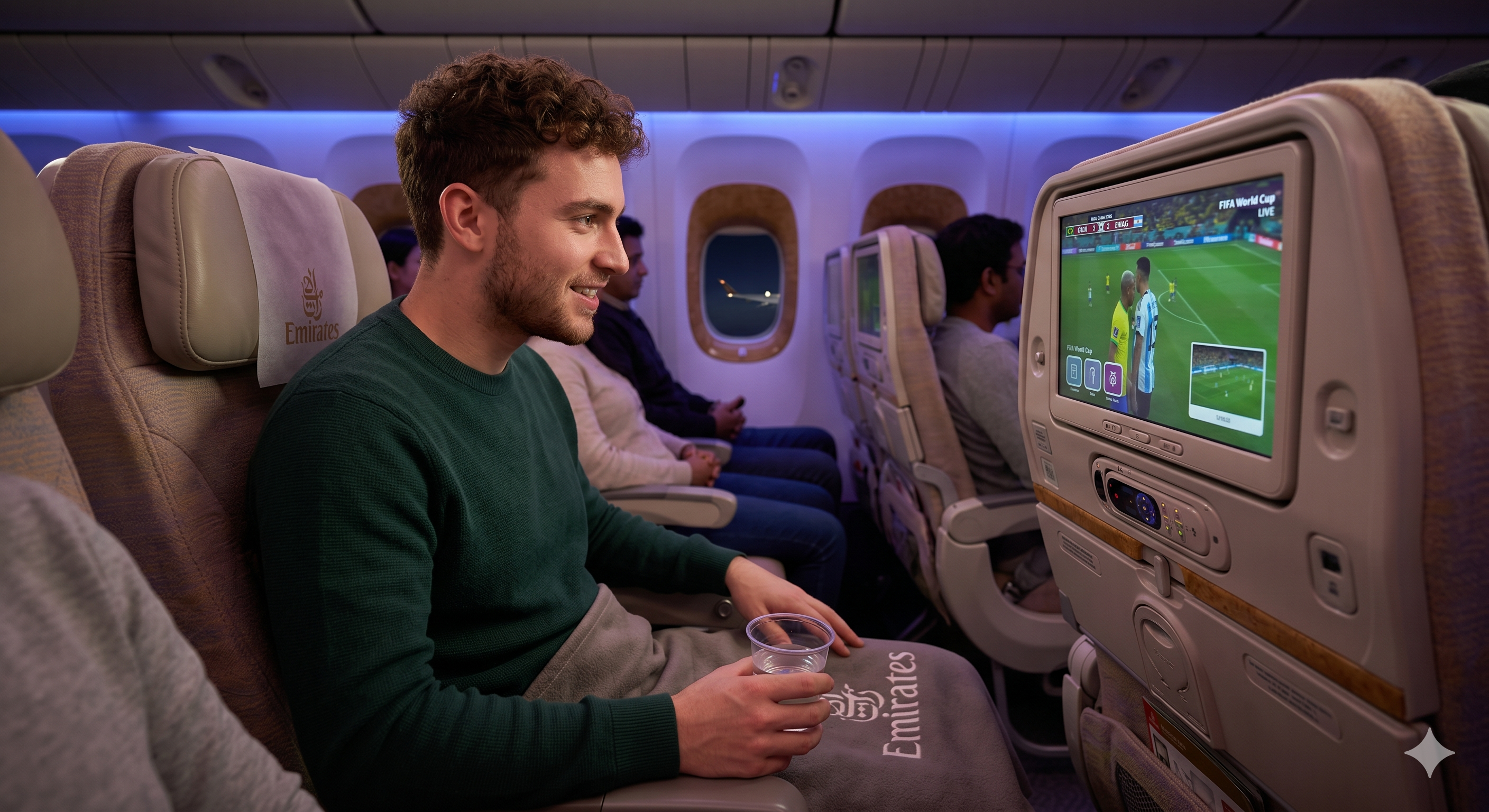
Live sport is the cruelest test for any network. You cannot buffer a goal. You cannot preload a penalty shootout and serve it two minutes later without ruining the whole point. Every frame either arrives on time or it is useless, and the demand does not spread evenly across time zones. Everyone wants to watch the same moments at exactly the same second. This is why what Emirates is quietly doing on its flights right now matters far beyond inflight entertainment.

Emirates has confirmed that every one of the 104 FIFA World Cup 2026 matches will be broadcast live onboard via Sport 24, the IMG-owned channel produced out of Stockley Park near London Heathrow. Sport 24 holds the exclusive global rights for inflight and maritime markets, meaning your seat on the Nairobi to Dubai Emirates flight becomes a legitimate viewing position for every match, all the way through to the final on July 19.
What makes this more than a passenger perk is the infrastructure shift running underneath it. For most of aviation history, inflight connectivity depended on geostationary satellites sitting roughly 35,000 kilometres above the equator. The physics of that distance is brutal. A data packet travelling up and back covers 70,000 kilometres, introducing a delay of around 600 milliseconds before a single byte even begins its return journey. That was manageable for email. For live sport, where broadcast delays already exist on the ground, it added extra lag onto an already imperfect experience. Emirates ran on Viasat and Panasonic Avionics for years, two companies that built solid businesses on geostationary connectivity. Both relationships are now over.
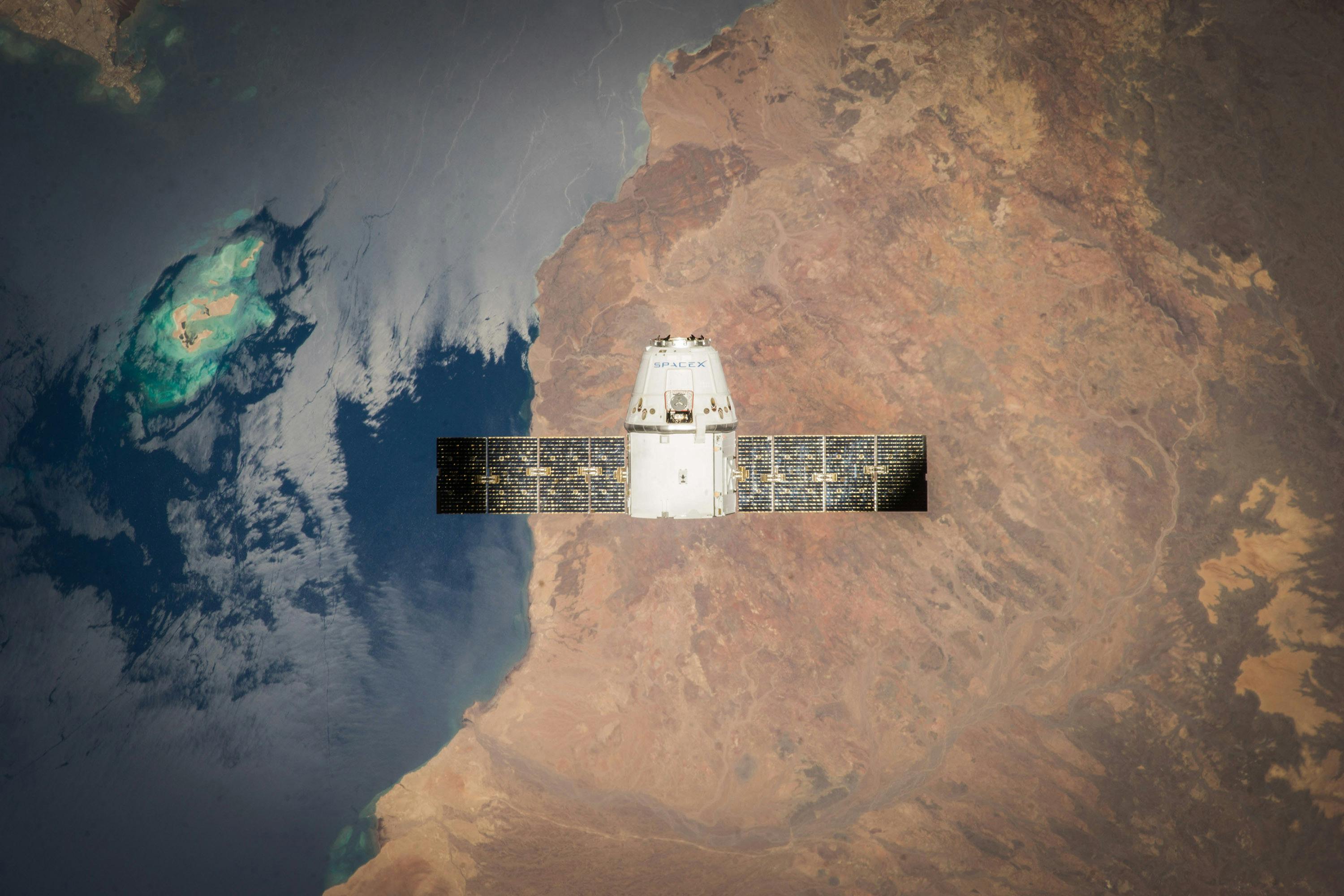
Emirates signed a deal with SpaceX's Starlink in late 2025 covering its full fleet of 232 aircraft, installing 14 planes per month. Each Boeing 777 gets two Starlink antennae. Each A380 gets three, an industry first. Starlink orbits at around 550 kilometres above the surface, roughly 64 times closer than a geostationary satellite. The round trip data delay drops from 600 milliseconds to under 40. Emirates President Sir Tim Clark said he was bringing what he called "the world's fastest Wi-Fi" to every seat on every flight. He was not overstating it. Independent benchmarking by Ookla found that Starlink's slowest 10 percent of inflight users still hit 63.71 Mbps, faster than the median of every other satellite network measured.
The World Cup is the first real proof of concept for whether this holds at peak concurrent load. At Qatar 2022, over 1.4 million passengers watched matches live on Sport 24 inflight, and that was over geostationary infrastructure. This tournament expands from 64 to 104 matches, with more aircraft carrying Starlink hardware than at any previous tournament. Knockout stages mean everyone wants the same screens at the same moment. If LEO satellite handles that without degrading, the geostationary era in aviation is functionally done.
Meanwhile, the rest of the industry is choosing its bet. Delta and JetBlue have both signed with Amazon's Project Kuiper, expecting installations from 2027. United, British Airways, Qatar Airways, and Virgin Atlantic have all gone to Starlink. Viasat and Panasonic Avionics, which spent decades building inflight connectivity into a proper business, just had that business disrupted by a rocket company. It did not happen gradually.
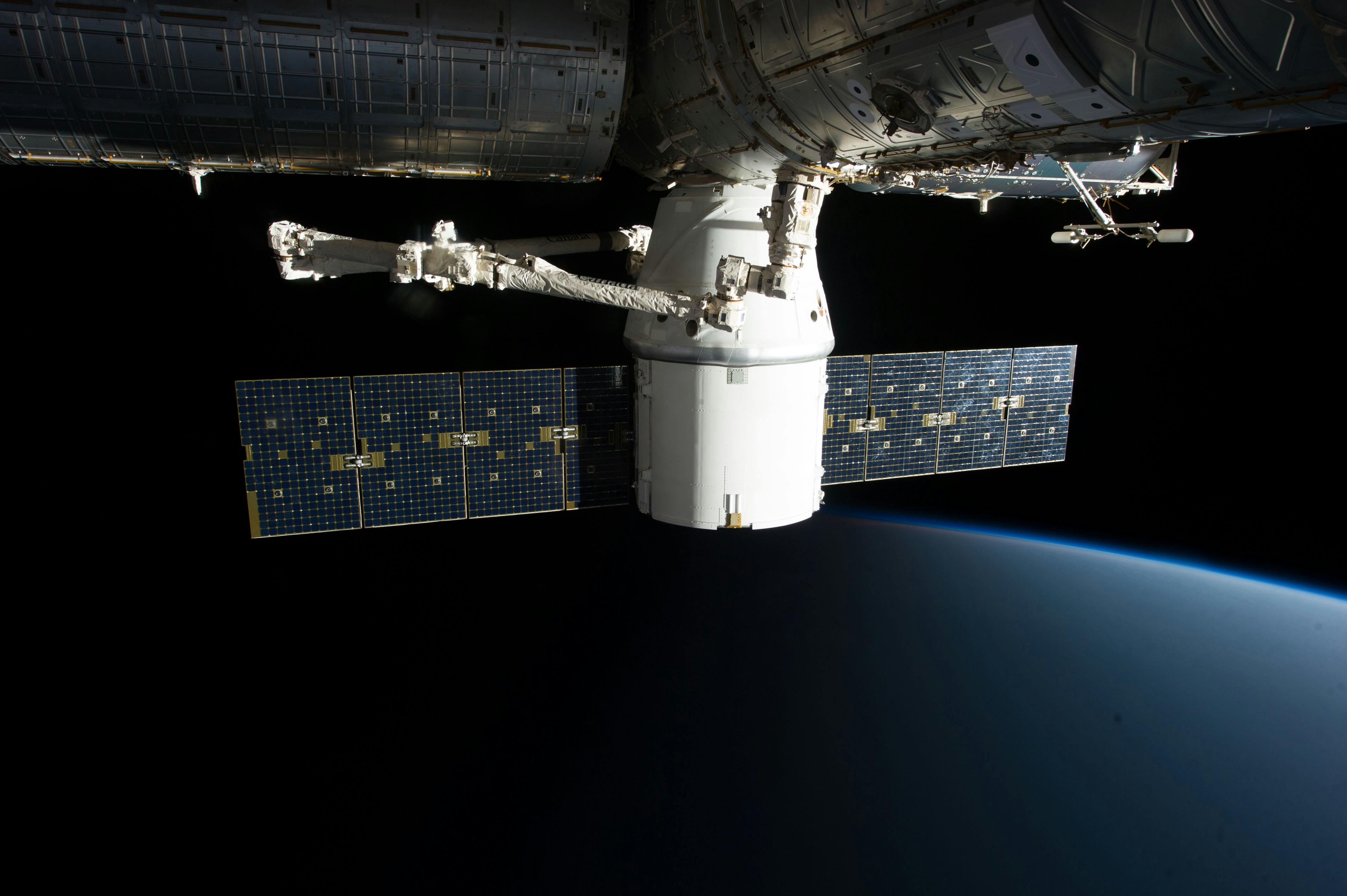
The question that follows is not specific to football. If low-earth orbit satellite can handle the bandwidth demands of live sport across hundreds of aircraft simultaneously, which other problems involving real-time delivery at scale does that not eventually solve? The airlines already placed their bets. The World Cup is where the receipts come in.