How Flutterwave’s New Banking License Changes the Competitive Landscape for Nigerian Banks and other fintech startups
Published: 2026-04-04T20:21:33 · Updated: 2026-04-22T08:35:34Z
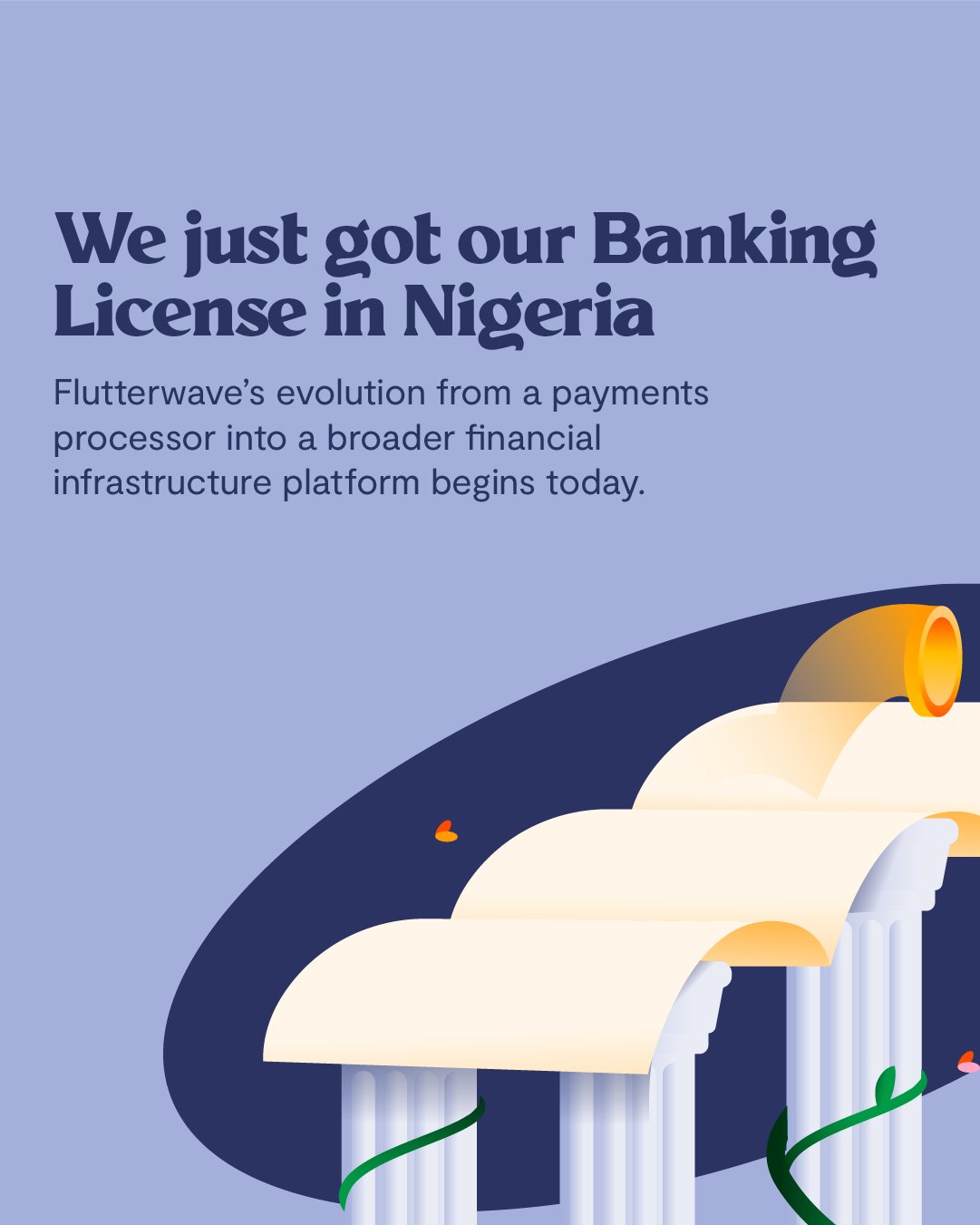
So Flutterwave just got a banking license. After a decade of operating as the primary bridge between global capital and local markets, the firm has moved from being a guest on the banking rails to owning the station.
Strategy
For years, Flutterwave maintained its dominance by perfecting the high-end API layer, focusing on global partnerships and cross-border flow. This strategy was effective, yet it left a flank open. While Flutterwave prioritized the "invisible" plumbing of the internet, competitors like Moniepoint and OPay were aggressive in securing banking licenses early. Those rivals built physical networks and consumer-facing tools that captured the daily habits of the Nigerian public.
This new license from the Central Bank of Nigeria (CBN) is a formal acknowledgment that infrastructure ownership is now a prerequisite for survival. By gaining the authority to hold deposits and manage the entire transaction lifecycle, Flutterwave effectively removes the middleman. It no longer needs to rely on external banking partners to house the funds it moves, a change that significantly improves its margins and settlement speeds. It is an internalization of the financial value chain that allows the company to capture more value from the $40 billion in payments it has processed to date.
The Friction of New Rivalries
Success, however, brings a specific kind of atmospheric pressure. For ten years, traditional commercial banks have been Flutterwave’s most vital allies. That relationship has flipped overnight. Flutterwave is now a direct competitor for the same deposit bases that traditional banks rely on for their own lending power.
There is a predictable period of friction ahead for the ecosystem. The risk of retaliation is real, whether through lobbying for more stringent fintech oversight or subtle "technical maintenance" in settlement connectivity. Traditional institutions rarely concede ground gracefully. Flutterwave is no longer just a helpful partner helping banks move money; it is a predator in their territory.
The Data Advantage
The true power of this license is amplified by the acquisition of the open-banking startup Mono earlier this year. If the banking license provides the heart to pump capital, Mono’s data-access infrastructure provides the brain.
This vertical integration allows Flutterwave to perform credit scoring with a level of precision that traditional banks struggle to match. By leveraging Mono’s APIs, they can analyze a merchant’s financial history across multiple platforms. This turns Flutterwave Capital into a formidable lending machine, offering working capital based on real-time cash flow rather than the slow, opaque paperwork that defines the legacy banking sector. This capability now extends beyond SMEs, as the license enables the rollout of enterprise treasury infrastructure for managing complex liquidity and large-scale disbursements.
Redefining the Consumer Experience
The consumer impact is most visible through the evolution of the Send App. What began as a tool for remittances is maturing into a comprehensive digital banking platform. Over a million users can now access personal account numbers, manage balances, and utilize "Tap to Pay" features within a single interface.
This represents an attempt to capture the entire lifecycle of currency. Flutterwave wants to touch the dollar when it is earned abroad, when it is sent home, and when it is eventually spent at a local merchant. By removing the fragmentation that has historically slowed African finance, the company has positioned itself as the foundational layer for capital movement. The destiny of the firm is now firmly in its own hands.