How Kenyans can invest in Dangote's refinery through the Nairobi Securities Exchange
General
Published: 2026-10-09T11:14:51 · Updated: 2026-10-09T09:14:51Z
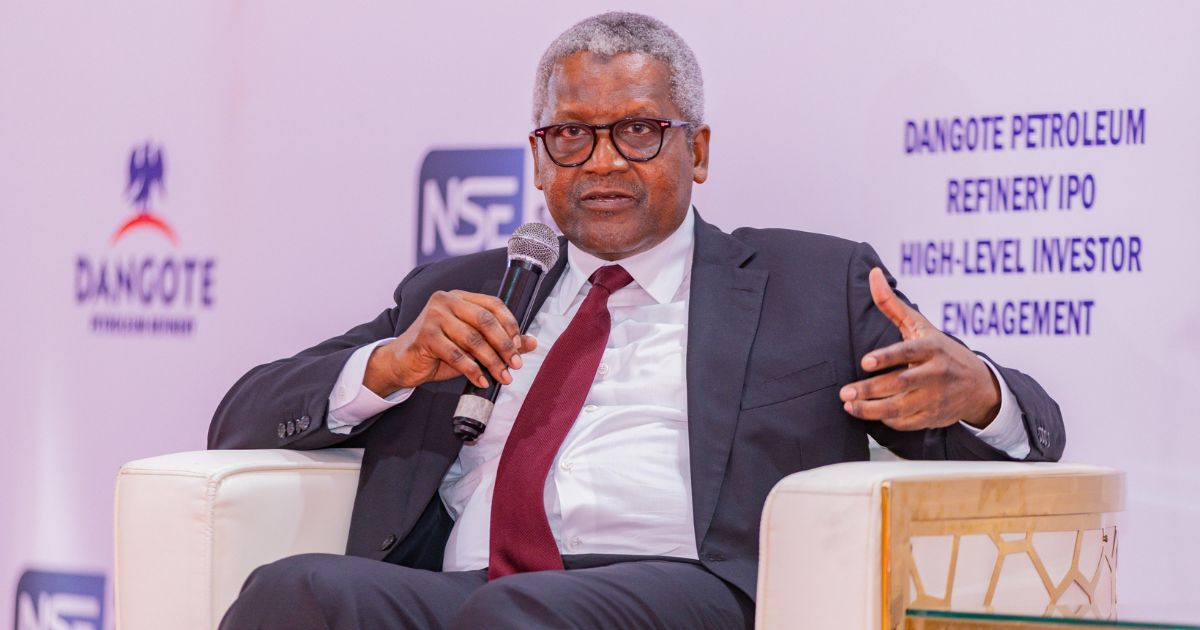
Kenyans can now invest in Aliko Dangote's petroleum refinery in Nigeria without opening a Nigerian brokerage account or personally converting shillings into naira. But participating in the initial offer requires at least KES 107,000, compared with roughly KES 500 for investors buying the minimum number of ordinary shares directly in Nigeria.
Both investments provide exposure to the same company, which is selling 4.1 billion shares at ₦525 each in an initial public offering (IPO) expected to raise approximately $1.6 billion. The difference lies in how those shares are made available. Nigerian investors can apply for as few as 10 ordinary shares, while the Kenyan offer requires a minimum of 2,000 certificates backed by shares in the refinery.
Kenya's Capital Markets Authority (CMA) approved the arrangement on October 5, allowing Renaissance Capital Kenya to offer up to 729 million of these certificates, worth approximately KES 39 billion. Investors pay in shillings, with trading on the Nairobi Securities Exchange (NSE) targeted for December 8, subject to regulatory clearance in Nigeria.
How a Nigerian share becomes a Kenyan investment
Suppose you apply for the minimum 2,000 certificates in Dangote's refinery. Your application costs KES 107,000 at the Kenyan offer price of KES 53.50 each, but you are not placing an order for ordinary shares directly on the Nigerian Exchange.
Instead, Renaissance Capital Kenya, working with its Nigerian counterpart, arranges participation in Dangote's IPO. Once the underlying shares have been allocated, they are held under custodial arrangements, allowing corresponding certificates to be issued to investors in Kenya. Each certificate represents one ordinary share, giving its holder economic exposure to the refinery through a security that can be held and traded locally.
These certificates are called Global Depositary Receipts (GDRs). Dangote is issuing ordinary shares in Nigeria, but the refinery itself is not issuing the Kenyan receipts. Renaissance Capital Kenya is arranging that separate instrument, making this an unsponsored inward GDR. The underlying shares remain within the custody structure, while investors receive receipts that are intended to trade on the NSE.
If the listing proceeds, investors will be able to buy and sell their receipts through Kenyan stockbrokers without arranging transactions on the Nigerian Exchange themselves. They can decide when to sell, although completing a transaction will still depend on finding a buyer at an acceptable price.
There is another advantage for people unable to afford the initial subscription. While the IPO requires applications for at least 2,000 receipts, subsequent NSE trading is expected to allow investors to purchase individual receipts. Someone without KES 107,000 could therefore have an opportunity to invest a smaller amount in December, provided the listing goes ahead. The price will depend on where the receipts trade at that time.
Holding a GDR also comes with different rights from holding an ordinary share directly. Investors can receive dividends declared by the refinery, with payments converted into shillings after applicable taxes and charges. They cannot vote directly at the company's shareholder meetings, and the arrangement currently provides no mechanism for converting their receipts into ordinary shares. Kenyan GDR holders also do not qualify for the Retail Investor Incentive Programme available under the Nigerian IPO, according to reporting on the offer memorandum.
Why the Kenyan offer costs KES 53.50 per receipt
Dangote's ordinary shares are priced at ₦525 each. At the exchange rate used when arranging the Kenyan offer, that translated to approximately KES 51.40. Yet the corresponding GDR costs KES 53.50, a difference of about KES 2.10 per receipt.
That difference covers costs associated with bringing the investment to Kenya, including commissions, regulatory charges and currency hedging. The hedging matters because investors commit their money in October, but the final allocation of Nigerian shares is not expected until November. During that period, the naira could strengthen or weaken against the shilling, changing the cost of acquiring the underlying shares. Renaissance Capital has accounted for that exposure in the Kenyan offer price.
Once the receipts begin trading, however, currency movements will remain a consideration for investors. Their value will be linked to Dangote's ordinary shares in Nigeria, but the receipts will trade in shillings. A rise in the Nigerian share price might produce a smaller gain in Kenya if the naira weakens against the shilling. Conversely, favourable currency movements could increase the shilling value of the investment.
The two markets may also value the same underlying business differently at particular moments. Kenyan investors could be eager to buy the receipts while Nigerian shareholders are selling, or demand in Nairobi could weaken while the ordinary shares are gaining in Lagos. The Nigerian share price provides an important reference, but local buying and selling pressures can cause the GDRs to trade above or below the value implied by the underlying shares.
None of these additional costs explains why the minimum investment in Kenya is so much higher than in Nigeria. That difference comes from the number of units required. Ten Nigerian ordinary shares cost ₦5,250, equivalent to roughly KES 500 at the exchange rate used for the comparison, while Kenyan investors must apply for 2,000 receipts.
The published terms establish that minimum but do not explain why it was set at that level. Renaissance Capital had not provided an explanation in response to Business Daily's enquiries as of October 6.
The result is an arrangement that simplifies access to a foreign investment while initially requiring Kenyan participants to commit considerably more money. That restriction could become less significant once individual receipts are available for trading on the NSE.
What if the listing doesn't go ahead?
Kenya's regulatory approval allows the offer to proceed locally, but it does not guarantee that investors will receive GDRs they can trade on the NSE.
The Kenyan offer must first meet a minimum success threshold of KES 50 million in qualifying, fully paid applications and allocated underlying shares. If that condition is not satisfied, the offer will lapse and applicants will receive their money back without interest.
There is also an outstanding regulatory requirement in Nigeria. Its Securities and Exchange Commission must approve, or issue the necessary no-objection for, the GDR listing. If the minimum success threshold is met but Nigerian clearance is not obtained, the receipts will not be issued or listed in Kenya.
Investors would instead hold the underlying refinery shares through an omnibus account maintained by the GDR issuer. Such an account holds securities on behalf of multiple investors, with individual entitlements recorded under the arrangement. Selling the investment would then depend on disposing of the ordinary shares through the Nigerian market, removing the convenience of trading the receipts directly on the NSE.
Even where the listing proceeds, investors are not guaranteed the full number of receipts requested. Renaissance Capital's participation depends on the allocation of ordinary shares from the Nigerian IPO, and the Kenyan offer is not underwritten. If fewer shares are allocated than investors apply for, subscriptions may be scaled back under an allocation method approved by the CMA.
The refinery's financial performance introduces a different set of risks. Dangote is raising capital to support plans to expand refining capacity to 1.4 million barrels per day, from its original designed capacity of 650,000 barrels. Whether that investment delivers attractive returns will depend on the refinery's operating performance, crude oil costs and the prices it obtains for refined products. Dividends are not guaranteed, and the GDR structure does not remove the commercial risks of owning exposure to the business.
Why Dangote needs a separate arrangement for Kenya
Dangote's refinery IPO was intended to attract investors from across Africa, but the company registered its public share offer in Nigeria. That approval did not automatically allow the same offer to be marketed across other African countries. Each market has its own securities regulations, requiring companies and intermediaries to establish arrangements that comply with the rules in the countries where investors are being approached.
The difficulties extend to the infrastructure used by stock exchanges. A share purchased in Nigeria cannot simply appear in a Kenyan securities account ready for trading. Ownership records must be maintained, securities have to be available for settlement, and the institutions handling transactions need arrangements that work across the two markets.
GDRs provide a way around some of these obstacles. The Nigerian shares remain under custodial arrangements while corresponding receipts are issued in Kenya, allowing local investors to trade exposure to the company without requiring its ordinary shares to be listed directly on the NSE.
The Dangote transaction is the first under Kenya's GDR policy framework. If the receipts are successfully issued and begin trading, the arrangement could provide a model for other foreign companies seeking Kenyan investors. Its usefulness will depend partly on whether investors can trade the receipts reliably, with sufficient buyers and sellers to support an active market.
How Kenyans can apply before October 13
The Kenyan GDR offer closes on Tuesday, October 13, 2026. Each receipt costs KES 53.50, with a minimum application of 2,000 receipts requiring KES 107,000 before any additional applicable charges. Further subscriptions must be made in multiples of 100 receipts, equivalent to KES 5,350 per additional block.
Applicants must pay the full subscription amount upfront. The programme provides for digital applications and subscriptions through authorised selling agents, with investors required to submit the identification and securities-account details specified in the offer documents.
Renaissance Capital Kenya is arranging the GDR offer. Prospective investors can obtain the short-form prospectus and application instructions through the investment bank or its partnering authorised selling agents. The CMA's official announcement explains the approved structure and directs investors to the offer documentation.
Other licensed intermediaries, including SBG Securities, Sterling Capital, Kestrel Capital, CPF Capital & Advisory and AXYS Investment Bank, are facilitating access to the Nigerian IPO through separate arrangements. Investors should establish which structure an intermediary is offering before applying, since participating through a Nigerian brokerage arrangement is not necessarily the same as purchasing the Kenyan GDRs.
The underlying shares are expected to be allotted around November 11, with NSE trading targeted for December 8, provided the required approvals are obtained. Investors should review the prospectus carefully before committing funds, particularly the provisions covering allotment, refunds, ownership rights and the possibility that the receipts may never be listed.
The offer concerns Dangote Petroleum Refinery & Petrochemicals in Nigeria, not the separate refinery project proposed for Kenya's Lamu County.
For now, the choice is between applying for at least KES 107,000 worth of receipts before October 13 or potentially buying smaller quantities through the NSE after listing. The second option may be more accessible to individual investors, but it remains conditional on regulatory approval, and the market price could differ from the initial offer price.
The Dangote transaction will be the first test of Kenya's GDR framework in practice. Its success will depend on more than attracting applications during the IPO. Investors also need the receipts to be issued, listed and actively traded for the promised convenience of accessing a Nigerian company through the NSE to materialise.