Kenya Begins Distribution Of Digital Learning Devices To Over 10,000 Schools
Finance
Published: 2026-06-10T17:20:39 · Updated: 2026-06-10T15:20:39Z
Why Kenya's New Digital Learning Push Faces a Familiar Logistics Wall
The State House is once again counting on hardware to fix the structural gaps in public education.
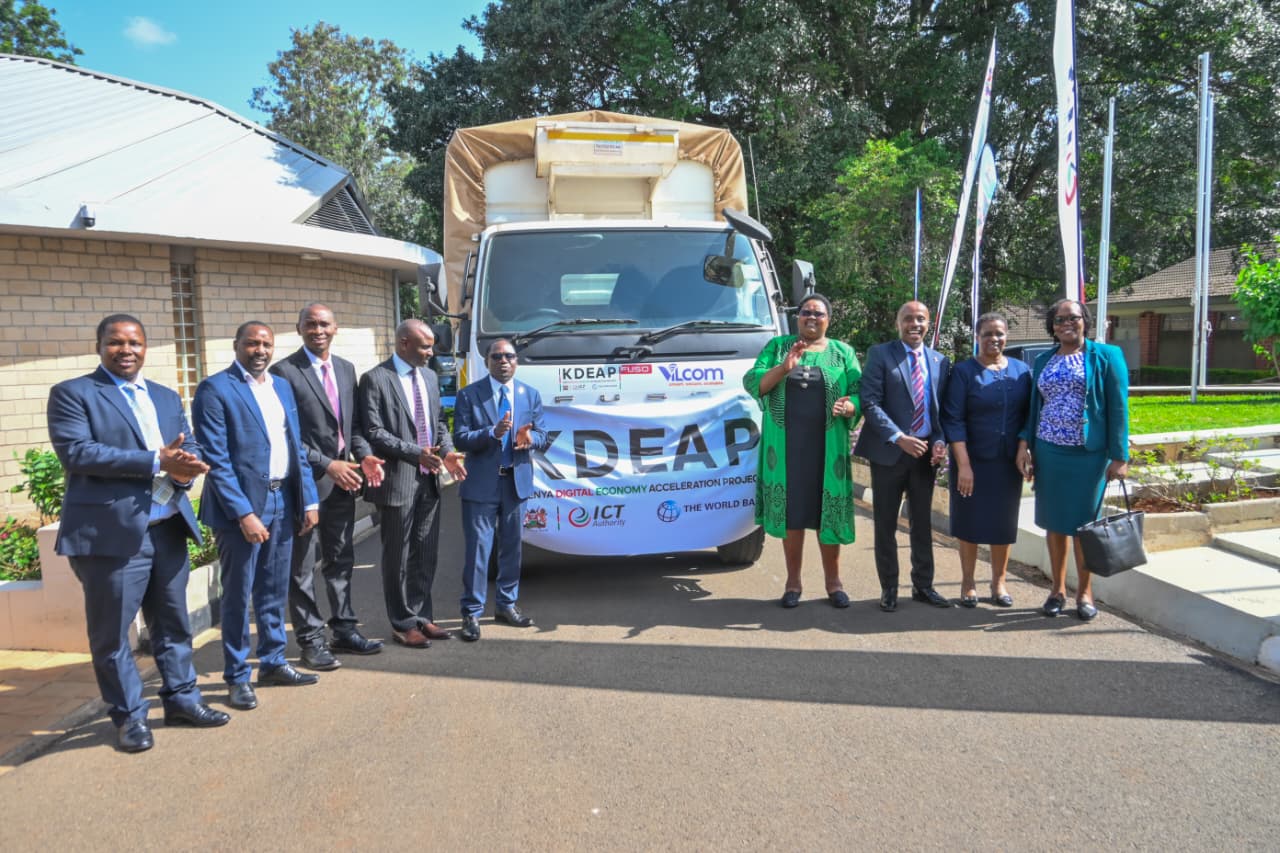
The government has officially launched the distribution of laptops and interactive smartboards to junior secondary schools across the country. Flagged off at the Centre for Mathematics, Science and Technology Education in Africa (CEMASTEA), the initiative will see 10,382 schools receive one teacher laptop and one 65-inch interactive smartboard each. Implemented by the ICT Authority under the World Bank-funded Kenya Digital Economy Acceleration Project (KDEAP), the rollout represents the state's latest attempt to inject technology into the Competency-Based Education (CBE) framework.
The project actually addresses a genuine need for visual and interactive learning tools in a rapidly changing labor market. But the state gets to show immediate action by shipping concrete assets to thousands of classrooms, while institutional backers like the World Bank can point to tangible milestones in digital capital allocation.
For anyone who has tracked Kenya's educational tech history over the past decade, this rollout brings intense deja vu. The announcement reads almost exactly like the multi-billion-shilling Digital Literacy Programme (DLP) launched years ago, which promised a tablet for every primary school child. That project largely stalled after thousands of expensive devices ended up locked in secure school storage rooms, rendered useless by a lack of electricity, non-existent internet, and teachers who had never been trained to use them.
The Infrastructure Disconnect
Building out expensive digital learning frameworks sounds progressive at a time when digital adoption is a global metric. Yet, behind the corporate press releases sits a distinct friction point in the Kenyan public school system. Silicon Valley tools are consistently deployed onto rural, off-grid realities.
A 65-inch interactive smartboard is a highly capable piece of hardware, but it is entirely useless without a reliable, continuous power supply. While the government notes that it has deployed 30,000 kilometers of fiber-optic infrastructure toward a 100,000-kilometer national target, the connection between those trunk lines and a rural classroom remains incredibly thin. Hundreds of the schools slated to receive these devices currently lack the stable, high-speed broadband required to stream educational content or run remote digital classes smoothly.
This infrastructure gap shifts the burden directly onto local school administrations. When a device breaks down or encounters a software error in a school miles away from Nairobi, there is no local IT support desk to call. Without a localized, funded maintenance framework, these smartboards risk becoming expensive, decorative whiteboards. The state itself implicitly acknowledges this vulnerability, admitting in its project briefs that the devices represent only a single component of an ecosystem that still requires teacher preparedness, digital content development, reliable electricity, and ongoing technical monitoring to survive.
The Human Capital Bottleneck
Even if the state solves the power and connectivity issues, the project faces a massive human capital hurdle: teacher preparedness. Shipping one laptop per school does little if the educators tasked with using it have not been systematically trained to integrate digital tools into daily lesson plans.
The ICT Authority has stated that the true value of the project will be measured by classroom impact rather than shipment volume, envisioning schools as centers of digital excellence. However, the current reality in many public schools is that teachers are already overwhelmed by the administrative demands of the new CBE curriculum. Forcing educators to learn how to operate an interactive 65-inch digital interface with zero long-term, in-person pedagogical training creates a classroom friction point that slows down instruction rather than accelerating it.
This gap exposes the core flaw of hardware-first development strategies. It is far easier for a government to buy and ship 10,000 laptops than it is to retrain 100,000 teachers or wire electricity to remote villages.
Until the state matches its hardware investments with equal spending on local power grids, last-mile internet, and teacher training, these smartboards will remain a high-tech layer slapped over an analog foundation.