Kenya clears M-Gas’s parent to apply for carbon credit sales abroad
Finance
Published: 2026-10-08T15:17:47 · Updated: 2026-10-08T13:17:47Z
Kenya has cleared Circle Gas, the UK parent of M-Gas, to apply for authorisation to sell carbon credits to buyers abroad – a route the company says could be worth significantly more than the credits it sells today. But Circle Gas is not counting that money in its financial plans yet. The company disclosed the development in its 2025 accounts, filed on September 30, 2026. The accounts say Kenya has cleared its carbon project to apply for a Letter of Authorisation, which would allow the credits to be used in international carbon markets. That is not the same as receiving the authorisation. The accounts do not say whether Circle Gas has submitted the application, and Kenya has discretion over whether to approve it. For a company that is still seeking about USD 28 million from outside investors to fund its growth, that distinction is significant.
Why the authorisation could make M-Gas credits more valuable
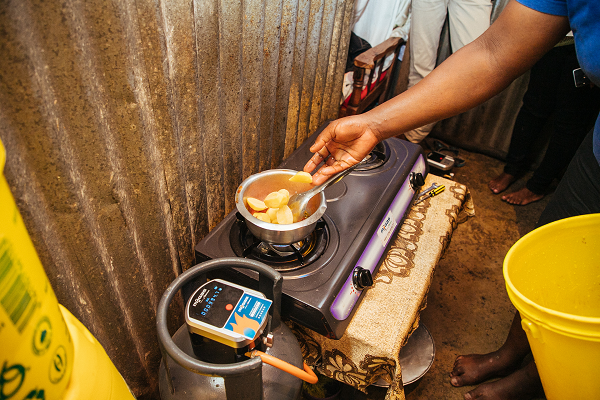
M-Gas sells LPG to households on a pay-as-you-cook model. Customers pay in small amounts through M-Pesa, while a smart meter on the cylinder controls the gas supply according to how much they have paid. The switch away from charcoal and other more polluting cooking fuels also generates carbon credits for Circle Gas. A carbon credit generally represents one tonne of carbon dioxide equivalent kept out of the atmosphere. Circle Gas currently sells these credits on the voluntary carbon market, where companies and other buyers purchase credits to offset emissions. An internationally authorised credit can potentially be used for something more specific: helping another country meet its climate target under the Paris Agreement, or meeting obligations under CORSIA, the carbon-offsetting scheme for international aviation. A tonne of emissions reductions cannot be counted twice. When Kenya authorises a credit for international use, it has to remove the corresponding emissions reduction from its own national accounting. This is known as a corresponding adjustment. Kenya charges the equivalent of USD 4, or roughly KES 520, for each authorised unit. Circle Gas does not disclose how much more an authorised credit could sell for. Its accounts only say the value would be significantly higher, meaning the eventual premium would also have to cover Kenya's authorisation fee.
Kenya still has the final say
The approval process is not a single yes-or-no step.Kenya's carbon market regulations provide for a letter of no objection, followed by a letter of approval and then authorisation for the international transfer of credits. The final authorisation has no stated deadline. The regulations say the government may authorise a transfer, subject to approval by the Cabinet Secretary. Circle Gas's accounts refer to a “Letter of Acceptance”, although that is not terminology used in the regulations. The company received a letter of approval in January 2026, according to an earlier announcement, so the references appear to relate to the same approval stage. There is another constraint: Kenya has put a ceiling on how many credits can be authorised for international transfer. A guide published in August caps authorised transfers at 10 million tonnes of carbon dioxide equivalent through 2030, with annual allocations limited to 1.67 million tonnes. That means Circle Gas is not operating in an unlimited market. Its request has to be considered within a national allocation.
Koko shows what is at stake
Another Kenyan clean-cooking company has already run into this barrier. Koko Networks, which sold bioethanol cooking fuel, shut down its operations in January 2026 after failing to secure a Letter of Authorisation for its carbon-credit project. The company had more than 1.5 million customers and over 3,000 fuel dispensing points across Kenya, according to reporting at the time. Its business model relied heavily on carbon-credit revenue, particularly access to international markets where the credits could command higher prices. Trade Cabinet Secretary Lee Kinyanjui said in February that approving Koko's full request would have used up the amount of carbon credits Kenya could otherwise authorise. Koko's shutdown does not mean Circle Gas faces the same outcome. Its application is at a different stage, and the two companies use different clean-cooking technologies and business models. But it does illustrate why Circle Gas's wording matters. Having permission to pursue international authorisation is not the same as having a guaranteed route to the market – the Kenyan government ultimately controls that step.
Circle Gas is already relying on carbon credits
Circle Gas recorded an operating loss of USD 25.5 million in 2025, equivalent to about KES 3.3 billion. At the same time, buyers have been paying in advance for carbon credits that Circle Gas will deliver later. The company received USD 29.1 million, or about KES 3.8 billion, from carbon-credit presales during 2025. Its future obligations from presold credits total about USD 57 million, or roughly KES 7.4 billion. Circle Gas says it expects to meet those commitments using credits generated by its own projects and, where necessary, credits purchased from other projects. Its customer base also fell during the year. Circle Gas ended 2025 with 391,139 customers, down 6% from 417,629 a year earlier, after removing customers who used little gas. That makes the company's need for fresh funding particularly relevant.
Circle Gas expects a net cash outflow of USD 53 million, or about KES 6.9 billion, between January 2026 and March 2027. It says it needs approximately USD 28 million from outside investors to continue growing. If that funding does not arrive, the company plans to stop expanding and operate within its existing resources. That would mean using only smart meters already manufactured, reducing its expansion in Tanzania and cutting meter spending in Kenya. Under that lower-growth scenario, the external funding requirement falls to about USD 25 million, or KES 3.2 billion. The directors use that more conservative plan as the basis for their assessment that Circle Gas can continue operating. The accounts say the group has sufficient funding sources to cover the plan, and the auditor did not identify a material uncertainty about the company's ability to continue as a going concern. The directors also point to their history of raising money and advanced discussions with what the accounts describe as a “sovereign clean cooking initiative”. But the potential value of international carbon-credit authorisation is not part of that forecast.
Circle Gas says the benefit is “expected to be significant”, but gives no estimate for what the additional revenue could be. The company's 2024 accounts were more specific. They said authorisation could generate at least USD 9 million, or roughly KES 1.2 billion. For now, the company has a route towards a potentially more valuable carbon market, but it does not yet have the final authorisation or the cash that could come with it. Its immediate growth plans still depend on outside funding. Until that arrives, Circle Gas says it will manage within its existing resources, making the financing round more important to M-Gas's expansion than the carbon-credit upside that could come later.