Kenya Space Agency Sends Climate Camera to the ISS in Historic African Space Collaboration
Published: 2026-04-14T16:04:30 · Updated: 2026-04-22T08:35:34Z
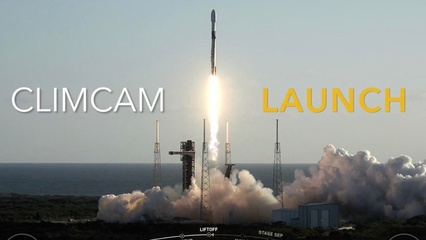
A SpaceX Falcon 9 rocket just hauled a 3.5-kilogram piece of hardware called ClimCam into orbit, and while that might seem like a small addition to the 11,000 pounds of cargo headed to the International Space Station, it represents a massive shift in how East Africa handles its own climate data. The satelite is a high-resolution, AI-driven camera built through a first-of-its-kind partnership between Kenya, Egypt, and Uganda.
The payload is currently tucked inside the Northrop Grumman Cygnus XL spacecraft, nicknamed the S.S. Steven R. Nagel. By the time you read this, NASA astronauts Jack Hathaway and Chris Williams will have likely used the station’s robotic arm to snag the craft. Once the ClimCam is installed on the Airbus Bartolomeo platform—essentially an outdoor balcony on the European Columbus Module—it will spend the next year staring down at East Africa.
What makes this mission different from Kenya’s previous forays into space, like the 1KUNS-PF in 2018 or the Taifa-1 satellite in 2023, is the integration of machine learning. Most satellites simply snap a photo and send the raw file back down, which takes up massive amounts of bandwidth and time. ClimCam is designed to process data in near real-time while still in orbit. It targets a ground sampling distance of 10 meters, which is sharp enough to distinguish between healthy crops and those dying from drought or to pinpoint the exact moment a river begins to breach its banks.
For a region that has spent decades relying on data "donated" or sold by European and American agencies, this is a play for data sovereignty. The Kenya Space Agency (KSA) and its partners aren't just looking for pretty pictures; they are looking for specific intelligence on flood detection and disaster management. When the rainy seasons become unpredictable, having an African-owned instrument providing localized climate intelligence means the response is dictated by local scientists, not external providers.
The technical heavy lifting was a Pan-African effort. While the KSA and the Uganda National Space Programme provided the strategic and regional focus, the Egyptian Space Agency (EgSA) acted as the technical lead, handling the assembly and testing in Cairo. This collaboration won them a slot through the United Nations Access to Space for All initiative, which effectively bypassed the multi-million dollar price tag usually associated with getting hardware onto the ISS.
This launch also serves as a strategic lead-in to the Kenya Space Expo and Conference coming to Nairobi this June. It moves the conversation from "what we plan to do" to "what we are currently doing." As the African Union’s own Space Agency begins to find its footing, the success of ClimCam proves that regional consortiums can produce sophisticated, AI-capable technology without needing to build an entire rocket from scratch.
The commissioning phase starts in August. By late 2026, the data streaming from the ISS will be feeding directly into agricultural and disaster response centers across the continent, marking the moment Africa stopped being a spectator in the space race and started owning the tools of the trade.