Murang’a Launches MyMurang’a App to Digitise Business Permits, Bursaries, and Jobs
Published: 2026-04-14T11:48:28 · Updated: 2026-04-22T08:35:34Z
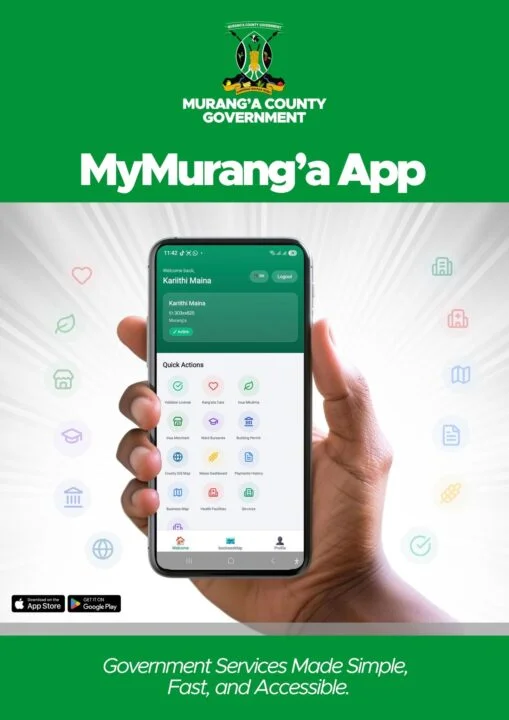
Murang’a County is attempting to shift the standard for devolved governance in Kenya from simple revenue collection to a digitized social contract. While most regional governments have used technology primarily as a digital cash register for parking fees and land rates, Governor Irungu Kang’ata is moving toward a more comprehensive integration of civic services. The launch of the MyMurang’a app, scheduled for April 18 at Kimorori Stadium, signals an intent to digitize the administrative workflows that have historically been defined by physical queues and lack of transparency.
Strategy: Moving Beyond the Revenue Trap
The core of this rollout is the consolidation of disparate county functions into a single interface. Traditionally, obtaining a Single Business Permit or a liquor license in Kenya involves a fragmented process of navigating multiple offices and payment counters. MyMurang’a pulls these into one platform, acknowledging that administrative friction is a direct tax on a citizen’s time.
What makes this approach notable is the inclusion of services like bursary applications and county job listings. Most counties avoid digitizing these areas because the political incentives for manual gatekeeping are high, while the financial ROI for the treasury is non-existent. By moving bursaries from opaque paper forms to trackable digital workflows, the administration is making it harder for ward administrators to control resources through patronage.
Structural Hurdles and Operational Risks
Despite the optimism surrounding the launch, the transition from a mobile app to a functional government is fraught with technical and social challenges.
- The Inclusivity Gap: Launching exclusively on the Google Play Store caters to an urban middle class. In a county with a significant rural population, a digital solution that lacks a robust USSD fallback or an offline integration risks becoming a gated community rather than a universal service.
- The Backend Reality: A sophisticated frontend is a liability if the backend remains analog. If an app submission eventually lands on a physical desk that requires a manual signature and a facilitation fee, the technology has failed its primary purpose. True digitisation requires refactoring the entire workflow, not just the interface.
- Data Sovereignty: The platform collects sensitive ID and financial data. In an environment where cyber threats against African infrastructure are rising, the county must ensure its security architecture complies strictly with the Data Protection Act. Tech-forward governance requires an ironclad commitment to privacy that goes beyond a simple PIN login.
The Bottom Line
Execution will determine whether MyMurang’a becomes a national blueprint or another platform gathering digital dust. The distance between a successful public demo and daily operational reliability is vast.
As seen with the recent rollout of Safaricom’s My OneApp, merging services into a single ecosystem is the easy part. Ensuring those services work every time, especially when a citizen’s business permit or education funding depends on it, is the real test. Murang’a has established a strong technical foundation, but the actual work of governance begins the day after the stadium lights go out.