Mwanga wa Elimu Movement Launches Africa EdTech Policy Toolkit at eLearning Africa 2026
Learn
Published: 2026-06-12T16:57:58 · Updated: 2026-06-12T14:57:58Z
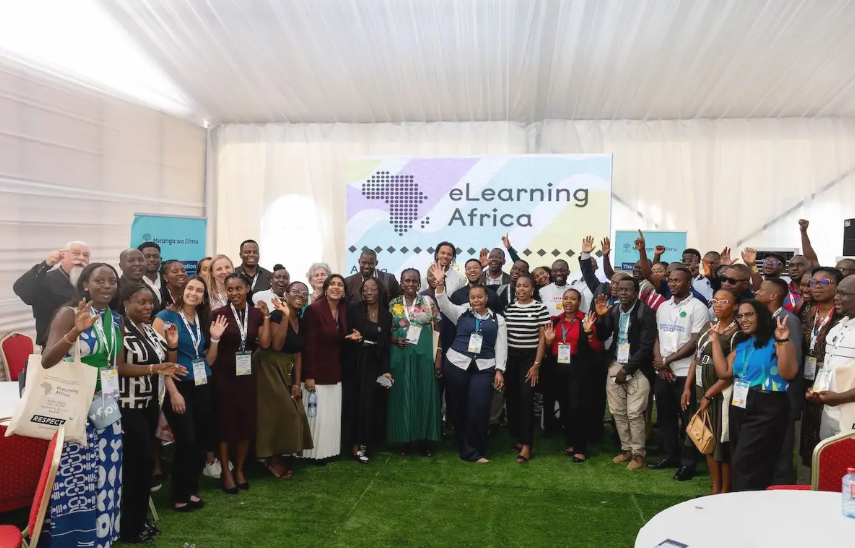
The movement to transform digital education across Africa just stepped out of the planning room and into the public arena.
The Mwanga wa Elimu movement held its first public workshop at the eLearning Africa 2026 conference in Accra, bringing together policymakers, developers, educators, researchers and funders from across the continent under one roof. The theme said it all: "Light the Way: Join Africa's EdTech Revolution."
Two things made this workshop significant — the official launch of the Africa EdTech Policy Toolkit, and the opening of membership to practitioners across Africa.
The Vision Behind the Movement
Mwanga wa Elimu — Swahili for "Light of Education" — is the on-the-ground engine behind the Africa EdTech 2030 Vision and Plan, a roadmap developed by AUDA-NEPAD and endorsed at the 39th Ordinary Session of the AU Assembly.
The ambition is enormous: build a unified, interoperable digital learning ecosystem that reaches 200 million learners with quality education by 2030.
That's not a distant dream — it's a deadline. And the movement's job is to make sure Africa hits it.
The Toolkit: A Practical Roadmap for Governments
The centerpiece of the Accra workshop was the Africa EdTech Policy Toolkit — a five-module framework built to help governments and stakeholders shape national digital education strategies that actually work.
The modules cover:
- 📋 National readiness diagnostics
- 🏛️ Core policy pillars
- 🗺️ Strategic implementation pathways
- 💰 Financing and procurement guidance
- 📚 A living library of case studies from Kenya, Rwanda, Ghana, Sierra Leone, Liberia and South Africa
The idea is to pair policy theory with real-world proof — giving decision-makers examples they can learn from and adapt, rather than starting from scratch.
The Voices in the Room
The urgency in Accra was palpable. The people leading this movement aren't interested in more reports or roundtables.
John Kimotho, Executive Coordinator, Mwanga wa Elimu: > "We don't need more people who understand the problem. We need more people who are willing to work on it together."
Joshua Valeta, Chairperson, Distance Education Association of Southern Africa (DEASA): > "The children who will be in classrooms in 2030 are in schools right now. We don't have the luxury of waiting for perfect conditions or perfect policy."
Barbara Glover, Advisor, Mwanga wa Elimu: > "The beauty of this movement is that we are bringing together various actors from the ecosystem so that we can move the Vision forward."
Why This Moment Matters
Africa's EdTech ecosystem has long suffered from fragmentation — too many isolated solutions, too little coordination, and policy frameworks that can't keep pace with the technology. Mwanga wa Elimu is trying to fix that at the root.
With a continental mandate, a practical toolkit now in hand, and membership open to practitioners across Africa, the movement has moved from vision to action. The clock is ticking — but for the first time, there's a shared playbook to work from.