Nigerian Court Dismisses Former Binance Executive’s Unlawful‑Detention Claim Against EFCC
Published: 2025-12-02T10:43:27 · Updated: 2026-04-22T08:35:34Z
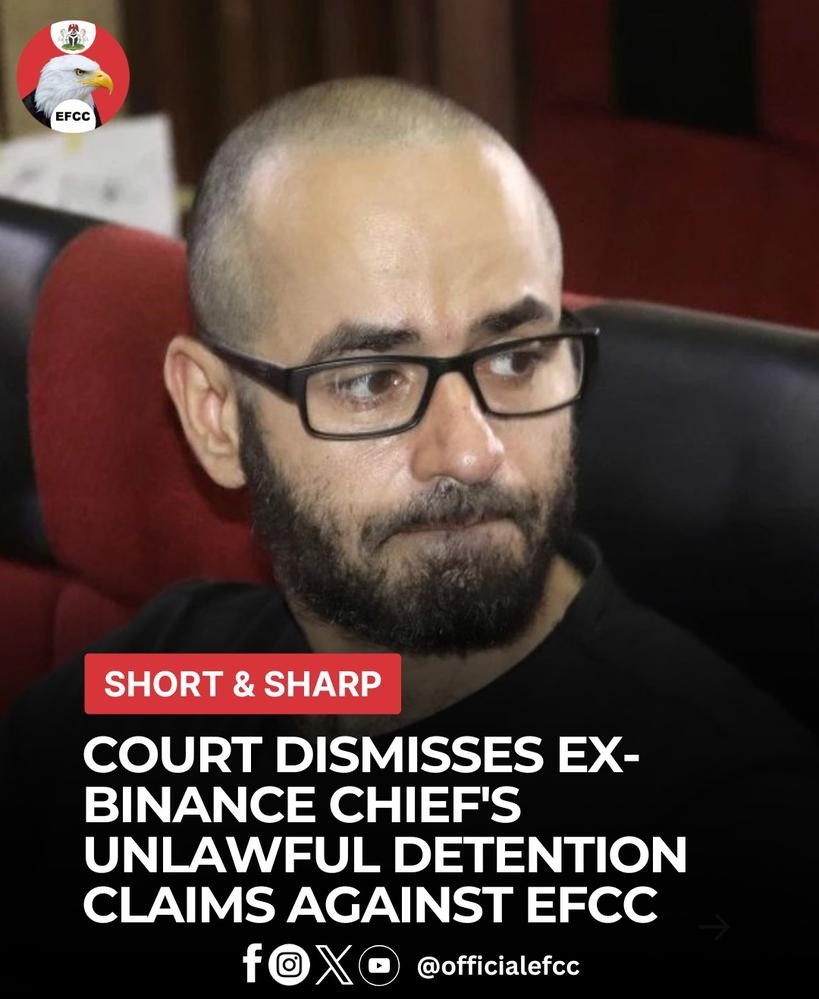
During the hearing, EFCC counsel argued that the detention was grounded in substantive charges, including breaches of the country’s stringent foreign‑exchange controls and suspected laundering of proceeds linked to digital‑asset transactions. The commission’s stance reflects a broader crackdown on crypto‑related activities that have drawn scrutiny from both local authorities and international regulators.
Gambaryan, who served as Binance’s head of compliance for the West African region, had been detained in early 2025 after the EFCC seized his passport and placed him under house arrest pending further investigation. His legal team claimed the measures violated his constitutional rights and sought damages for the alleged unlawful confinement. The court, however, found insufficient evidence to overturn the EFCC’s actions, emphasizing the agency’s mandate to enforce anti‑money‑laundering (AML) statutes.

The case underscores the growing friction between global crypto exchanges and emerging‑market regulators. Binance, which entered Nigeria in 2019 through a partnership with local payment provider Paystack, has faced repeated regulatory challenges across the continent, from licensing disputes in Kenya to heightened scrutiny in South Africa. While the exchange has emphasized its commitment to compliance—recently announcing a $50 million fund to bolster AML capabilities in Africa—authorities remain wary of the sector’s potential to facilitate illicit flows.
Nigeria’s central bank, which banned the use of cryptocurrencies for payments in 2021, has since launched its own digital currency, the e‑Naira, and continues to pursue a “balanced” approach that encourages innovation while curbing financial crime. The dismissal of Gambaryan’s suit may embolden the EFCC to pursue further actions against crypto operators deemed non‑compliant, a development that could impact market liquidity and investor confidence in the region.
Industry observers note that the ruling could set a precedent for future cases involving crypto executives and regulators in other jurisdictions where enforcement frameworks are still evolving. “The court’s decision reinforces the message that regulatory bodies in Africa are prepared to enforce AML and FX regulations rigorously, even against high‑profile figures from global firms,” said a senior analyst at a Lagos‑based fintech consultancy.
The outcome also highlights the delicate balance Binance must strike between expanding its footprint in fast‑growing markets and adhering to a patchwork of national regulations. As the exchange navigates the post‑court landscape, its next steps—whether through legal appeals, settlement negotiations, or heightened compliance measures—will be closely watched by investors and regulators alike.