Safaricom to compete with local developers for school and SME software contracts
Published: 2026-03-29T12:31:24 · Updated: 2026-04-22T08:35:34Z
Let's face it. Your average Kenyan tech bro isn't in Microsoft or Safaricom or even employed. For many of us survival has always meant the hustle. It's a world of freelance gigs and late-night contracts where you fight for every inch of ground. Lately, that market hasn't been good either. Between AI and overseas developers undercutting local bids for fifty dollars, being a software developer is starting to look uncanny.
Then comes Safaricom.
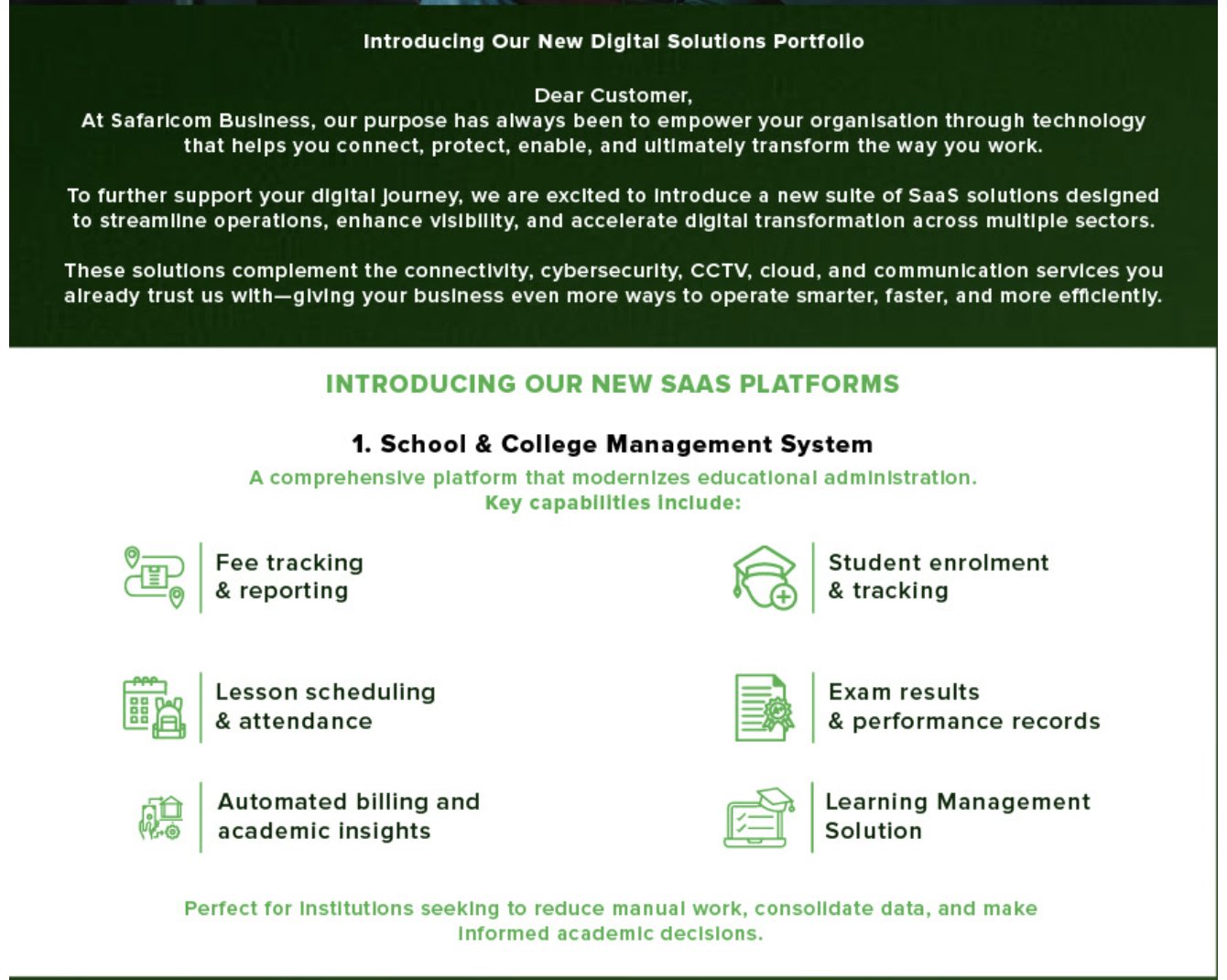
Safaricom is officially moving into the New Digital Solutions Portfolio. This is a fancy corporate term for school management systems, retail POS tools, and HR payroll platforms. While shareholders might see a savvy pivot to offset dying SMS margins, it's hard not to see how selfish this pivot is. Shouldn't these guys be puting this resources in AI, Starlink, and other high effort projects?
There is a real sting in watching a company with Safaricom’s billions fight for these specific crumbs. Kenya already has dozens of local firms that have perfected school management and retail inventory. This move does not feel like pioneering. It looks like a giant taking up space in a room that was already full.
It feels selfish. While global tech giants are racing toward proprietary LLMs and biotech, our biggest player is using its massive muscle to sell payroll software to small businesses. This is the definition of low-hanging fruit. We need Safaricom to focus on "hard problems" like massive AI infrastructure or localized data centers that no small startup could ever hope to afford.
They are doing some of that work, of course. The 2025 iXAfrica data center partnership for AI-ready infrastructure is a step in the right direction. However, those big moves feel like a side quest while the SaaS land grab remains the main mission. When the ecosystem’s leader spends its energy building a school ERP, it feels less like they are building a foundation for us to stand on and more like they are building a ceiling we are destined to hit.
Partner or Predator? The dream used to look different. Back in early 2025, Safaricom put out an Expression of Interest seeking SaaS partners for things like CRM and HR. The vision was a marketplace. It was supposed to be a foundation where local startups could plug in their specialized tools to reach millions of customers.
Instead, the branding on these new tools is murky at best. We still do not know if these are homegrown products or white-labeled versions of local solutions. If the giant has pivoted from being the platform for startups to being their direct competitor, the signal to every founder in Nairobi is chilling. It tells you that if your product is successful enough to be noticed, Safaricom might just decide to build it themselves and turn off your oxygen.
In Conclusion Safaricom has a duty to find growth for its shareholders, and for the end-user, this competition might even drive prices down in the short term. Yet a thin line exists between accelerating digital adoption and suffocating the niche innovation that makes our tech scene unique.
We need a Safaricom that tackles the capital-intensive infrastructure that remains out of reach for local startups. Whether Safaricom decides to be the foundation for the next generation of builders or the entity that replaces them will define the next decade of the Silicon Savannah.