Safaricom’s Masoko quietly drops Google Pixel phones from its store
Published: 2026-05-28T15:27:49 · Updated: 2026-05-28T13:27:49Z
Safaricom's Failed Bet on Formal Phone Retail in Kenya
Safaricom's e-commerce platform, Masoko, attempted something that looked straightforward: bring order to Kenya's chaotic smartphone market by offering legitimate retail channels for premium devices. Less than two years in, the experiment is dead. Google Pixel phones have vanished completely from the platform.
The Evidence of a Complete Exit
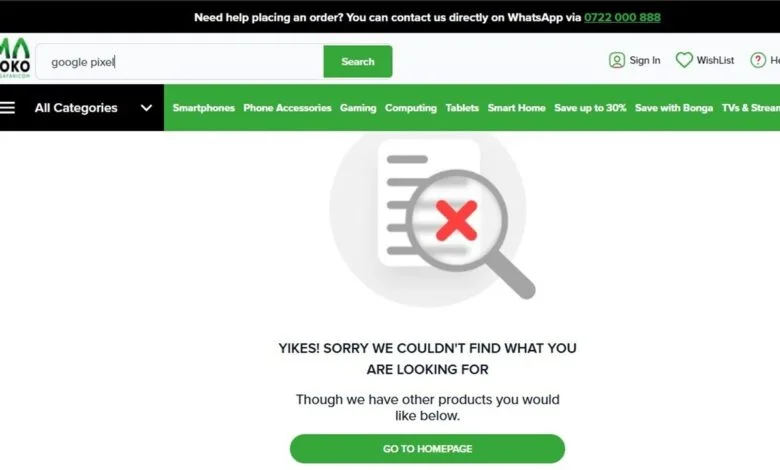
A search on Masoko confirms total erasure. The brand "Google" has been removed from their product filters. Keyword searches for "Pixel" return nothing. But OnePlus and NOTHING devices remain fully stocked and searchable. This wasn't a supply shortage. It was a deliberate delisting.
[Image: Masoko's mobile brand index completely missing any trace of the Google Pixel]
The disappearance marks a quiet failure for Safaricom's attempt to formalise the market.
Why the Math Broke
When Masoko launched its Pixel lineup, the pricing looked survivable. The Pixel 8 Pro listed at KES 113,275. The Pixel 7 Pro at KES 66,990. Both prices factored in import taxes, logistics, and the retailer's margin.
The problem arrived when independent importers began undercutting those prices on older Pixel generations. These traders operate with minimal overhead—no corporate structure, no formal tax obligations, no large facilities. They could absorb thinner margins because their cost base was fundamentally different from Masoko's.
Masoko couldn't chase those prices. Its institutional costs didn't allow it. Meanwhile, inventory moved slowly. Premium Android phones remain a luxury purchase in Kenya, even with legitimate retail backing. Slow turnover plus fixed overhead equals margin compression. Eventually the unit economics broke.
Masoko had tried to compete with the market it was designed to formalise. The market won.
What This Reveals About Kenyan Retail
This failure exposes something counterintuitive: scale and legitimacy don't guarantee success in emerging markets when the informal sector operates more efficiently.
Safaricom brought regulatory compliance, formal tax obligations, brand credibility, and massive distribution reach. Independent importers brought agility, lean cost structures, and price flexibility. Kenyan consumers chose price. They were willing to tolerate supply volatility and weaker warranties for significant savings.
Masoko's advantage—being institutional—became its disadvantage. Heavy overhead made it impossible to compete with players who moved faster and cheaper.
Back to the Underground
Masoko has issued no statement about whether this delisting is permanent or temporary. The silence itself is telling.
For Kenyans wanting to buy a Google Pixel right now, the path is clear: independent electronics dealers, personal imports, or the gray market networks that continued operating throughout Masoko's experiment.
The attempt to formalise niche hardware retail in Kenya has ended. The informal market remains.