Why CEIL Summit 2026 Could Be the Most Important Room for East African Innovation This Year
General
Published: 2026-08-28T21:55:06 · Updated: 2026-08-28T20:31:50Z
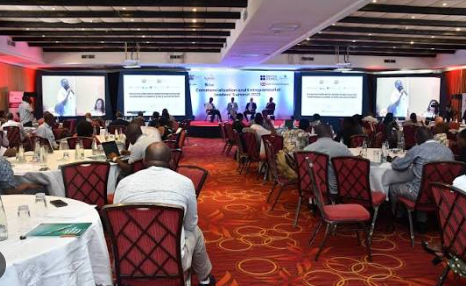
The tweet from Kenya Innovation Agency (KeNIA) is short on details but long on implication: CEIL Summit 2026 is coming, and the promise is that the room will hold the people who decide whether African research ever leaves the lab. For founders and developers across Nairobi, Kampala, Dar es Salaam, and Kigali, the stakes are not abstract. The summit’s stated focus — entrepreneurial institutions, commercialisation, and research-to-impact — speaks directly to the region’s most stubborn bottleneck: we generate ideas, but we struggle to turn them into revenue-generating products.
The previous summit’s highlights, teased in the tweet, point to a gathering of leaders, researchers, innovators, and industry players. But the real question for East Africa is not who attends; it is whether the conversations translate into mechanisms that outlast the event. The region’s universities and research institutes are full of prototypes that never reach market, largely because the institutional incentives reward publications over patents. CEIL Summit 2026 appears designed to confront that misalignment head-on, and that is why it matters beyond the conference hall.
For Kenyan founders, the connection to KeNIA is the immediate hook. The agency has been the government’s primary vehicle for pushing innovation policy, and its involvement signals that this is not a purely academic exercise. But the tension is obvious: government-backed initiatives in East Africa often excel at launching frameworks and struggle with enforcement or follow-through. The summit’s success will be measured not by the energy in the room but by whether the institutions that attend actually change their internal rules — tenure criteria, intellectual property ownership, and startup incubation budgets — after the event ends.
The commercialisation angle is where the region’s pain is most acute. Tanzanian agritech researchers have developed drought-resistant crop strains; Ugandan health labs have produced diagnostic tools; Kenyan engineers have built fintech solutions for informal savings groups. Yet the journey from validated prototype to scalable business remains a graveyard of missed opportunities. The summit’s focus on entrepreneurial institutions suggests a shift: instead of asking individual founders to carry the entire burden of commercialisation, the conversation is moving toward making universities and research bodies themselves more commercially literate. That is a harder, slower, but ultimately more sustainable fix.
There are open questions the tweet does not answer. Who funds the follow-up support after the summit? Which institutions have committed to concrete policy changes, and what metrics will track their progress? The risk is that CEIL Summit 2026 becomes another high-level networking event where the same faces meet, applaud each other’s vision, and return to business as usual. For East African SMEs and developers, the value will come from whether the summit produces actionable pipelines — clear pathways for researchers to access seed funding, mentorship, and market entry support without having to navigate a dozen disconnected agencies.
The regional angle is critical. Kenya’s innovation ecosystem is the most mature, but Nigeria and Ghana are closing the gap, and Rwanda is punching above its weight in policy design. A summit that only centres Nairobi would be a missed opportunity. The tweet’s mention of “entrepreneurial institutions” as a theme suggests the organisers understand that the problem is systemic, not geographic. The question is whether the 2026 edition will include enough voices from Uganda’s manufacturing corridors, Tanzania’s agricultural hubs, and Rwanda’s tech clusters to make the solutions genuinely regional.
The verdict on CEIL Summit 2026 will not be delivered in the conference room. It will come months later, when a researcher in Kampala can point to a new institutional policy that lets them hold equity in their own startup, or when a Kenyan university actually spins out a company with a clear commercial path. The summit is a signal, and a promising one, but signals do not build companies. The tension is whether KeNIA and its partners can convert this moment into sustained institutional reform — or whether it becomes another well-documented, poorly-executed gathering. East Africa does not need more conversations about innovation; it needs institutions that reward it.